
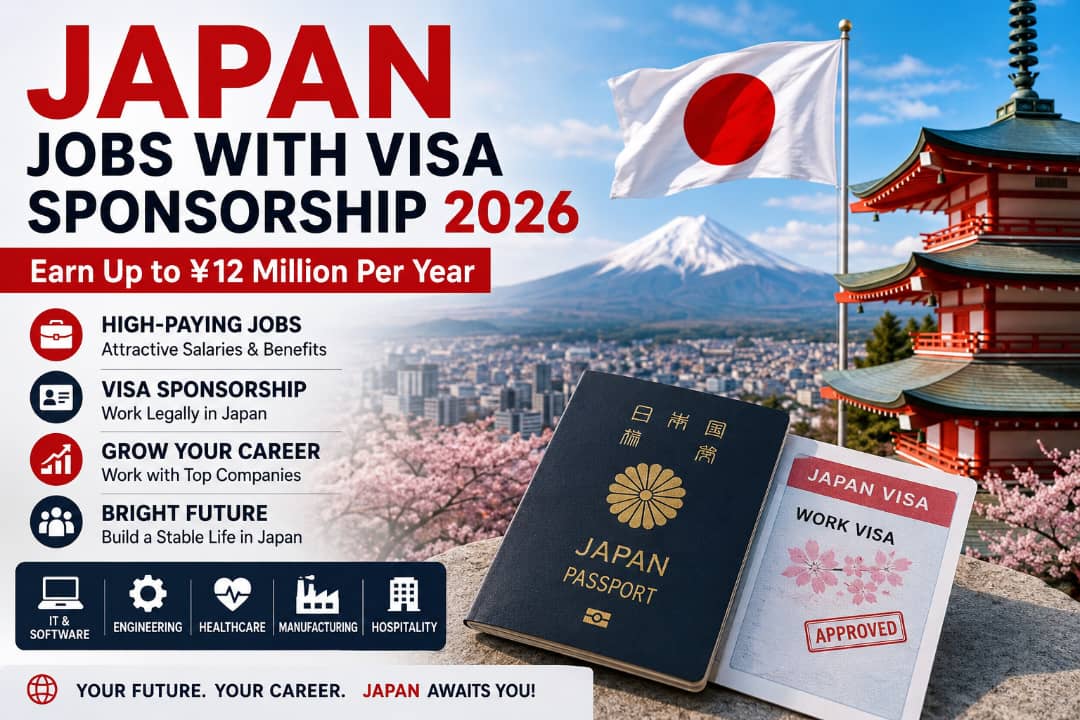
Japan has become one of the most attractive destinations for international professionals seeking stable employment, competitive salaries, and an excellent quality of life. Known for its advanced technology, strong economy, and world-class infrastructure, the country continues to welcome skilled foreign workers to address labor shortages across several industries.
In recent years, Japan has introduced significant immigration reforms to make it easier for qualified foreign nationals to live and work in the country. As its population ages and the number of working-age citizens declines, Japanese employers are increasingly looking beyond their borders to recruit talented professionals in sectors such as information technology, engineering, healthcare, manufacturing, construction, hospitality, and education.
For job seekers from countries like Nigeria, India, the Philippines, Kenya, Ghana, and many others, this creates exciting opportunities to build an international career while enjoying the benefits of living in one of the safest and most technologically advanced countries in the world.
Unlike what many people believe, there isn’t just one “Japan Work Visa.” Instead, Japan offers several work visa categories based on your occupation, qualifications, and the type of job you have secured. Understanding which visa applies to your situation is one of the first steps toward successfully relocating to Japan.
Another reason many professionals are choosing Japan is its strong employee benefits. Depending on your employer and visa category, you may receive health insurance, pension contributions, paid annual leave, transportation allowances, bonuses, and opportunities for long-term career development. Some companies also assist international employees with relocation, accommodation, and Japanese language training, making the transition much smoother.
However, obtaining a Japanese work visa requires proper preparation. You must first secure a job offer from a qualified employer, meet the eligibility requirements for your profession, and complete the necessary immigration procedures before travelling. While the process is straightforward for many applicants, understanding each step can help you avoid delays and improve your chances of approval.
In this comprehensive guide, you’ll learn everything you need to know about the Japan Work Visa 2026. We’ll explain the different visa categories, eligibility requirements, salaries, industries currently hiring foreign workers, how to find legitimate visa-sponsored jobs, and practical tips to help you begin your career in Japan with confidence.
Why Japan Needs Foreign Workers
Japan is facing one of the most significant workforce challenges in the world. With a declining birth rate and an ageing population, many industries are struggling to recruit enough workers to meet growing demand. This shortage has affected both highly skilled professions and essential industries that keep the country’s economy running.
To address this challenge, the Japanese government has expanded pathways for foreign workers and encouraged businesses to hire qualified international talent. As a result, companies are increasingly recruiting professionals from overseas to fill positions that cannot easily be filled locally.
The demand is particularly high in sectors such as information technology, engineering, healthcare, manufacturing, construction, agriculture, hospitality, and logistics. Employers are looking for candidates who have the right skills, a willingness to learn, and the ability to adapt to Japan’s professional work culture.
For international job seekers, this presents a valuable opportunity. Beyond earning a competitive income, working in Japan allows you to gain international experience, develop new technical skills, and build a career in one of the world’s leading economies. Some visa categories may also provide pathways to long-term residence if you continue to meet the legal requirements.
Types of Japan Work Visas and Who Can Apply
One of the biggest mistakes many international job seekers make is assuming that Japan has a single work visa for all foreign employees. In reality, Japan offers several work visa categories, each designed for a specific profession or skill level.
The visa you receive depends largely on the type of job you have been offered, your qualifications, and whether your employer is authorized to sponsor foreign workers. Understanding these categories before you apply can save you time and help you target opportunities that match your experience.
Let’s take a closer look at the most common work visas available to foreign professionals in 2026.
1. Engineer/Specialist in Humanities/International Services Visa
This is one of the most popular work visas for skilled foreign professionals. It is designed for individuals employed in technical, professional, or international business roles.
If you work in areas such as software development, IT support, engineering, accounting, finance, marketing, translation, education, or international business, this is likely the visa your employer will sponsor.
For example, a software developer hired by a technology company in Tokyo or an accountant joining a multinational corporation in Osaka would typically apply under this visa category.
Who Is Eligible?
To qualify, you generally need:
A bachelor’s degree or equivalent qualification related to the job.
Relevant work experience, particularly if you do not hold a university degree.
A confirmed job offer from a company in Japan.
An employer willing to support your visa application.
This visa is especially attractive because it covers a wide range of professional careers and offers opportunities for long-term employment.
2. Highly Skilled Professional Visa
If you have advanced qualifications and extensive professional experience, you may qualify for Japan’s Highly Skilled Professional Visa.
This visa was introduced to attract exceptional international talent who can contribute to Japan’s economy and innovation.
Applicants are assessed using a points-based system that considers factors such as:
Educational qualifications.
Professional experience.
Annual salary.
Research achievements.
Japanese language ability.
Age.
Professionals who score enough points may enjoy additional benefits, including faster access to permanent residency, permission for certain family members to work, and greater flexibility in employment.
This visa is particularly popular among senior engineers, AI researchers, university professors, medical professionals, and experienced executives.
3. Skilled Labor Visa
The Skilled Labor Visa is intended for individuals with specialized skills that are difficult to replace in the local workforce.
Typical occupations include:
Professional chefs specializing in foreign cuisine.
Aircraft maintenance engineers.
Experienced construction specialists.
Sports trainers.
Skilled artisans.
Applicants usually need several years of practical experience before qualifying under this category.
Unlike the Engineer Visa, which focuses on academic and professional occupations, the Skilled Labor Visa recognizes expertise gained through years of hands-on work.
4. Specified Skilled Worker (SSW) Visa
The Specified Skilled Worker (SSW) Visa has become one of Japan’s most important immigration pathways.
It was introduced to help employers address labor shortages in industries where recruiting enough local workers has become increasingly difficult.
Some of the sectors covered include:
Nursing care.
Construction.
Manufacturing.
Agriculture.
Fisheries.
Food service.
Hospitality.
Building cleaning.
Shipbuilding.
Depending on the occupation, applicants may need to pass a skills examination and, in many cases, demonstrate basic Japanese language ability.
For many foreign workers, the SSW Visa provides an accessible route to working legally in Japan while gaining valuable international experience.
What Qualifications Do Employers Look For?
Although the requirements vary depending on the role and visa type, Japanese employers generally seek candidates who combine technical expertise with professionalism and a willingness to adapt.
Educational Background
Many skilled positions require a university degree in a relevant field such as engineering, computer science, business administration, nursing, or finance.
However, some occupations—particularly under the Specified Skilled Worker program—place greater emphasis on practical skills than academic qualifications.
Relevant Work Experience
Experience remains one of the strongest advantages during recruitment.
Employers prefer candidates who have demonstrated success in previous roles and can quickly contribute to the organization.
For technical positions, experience with industry-standard tools, software, and equipment can significantly improve your chances.
Japanese Language Skills
One question many applicants ask is whether they must speak Japanese to work in Japan.
The answer depends on the job.
Many multinational technology companies operate in English and may not require advanced Japanese language skills. However, positions involving customer interaction, healthcare, hospitality, or local business operations often expect applicants to communicate in Japanese.
Even when not required, learning basic Japanese can make daily life easier, improve workplace communication, and increase future career opportunities.
Adaptability and Professionalism
Japanese workplaces are known for their strong emphasis on punctuality, teamwork, respect, and continuous improvement.
Employers value candidates who demonstrate a willingness to learn, respect cultural differences, and contribute positively to the workplace.
Showing enthusiasm for Japanese culture and a commitment to personal growth can leave a positive impression during interviews.
Salary Expectations in Japan
Salaries in Japan vary depending on your profession, qualifications, employer, and location.
For example:
Software Engineers often earn between ¥5 million and ¥10 million per year, while senior professionals at large technology companies may earn over ¥12 million annually.
Mechanical and Electrical Engineers typically earn ¥4.5 million to ¥9 million per year.
Nurses and Healthcare Professionals generally earn ¥3.5 million to ¥7 million annually, depending on their specialization.
Hospitality Managers may earn ¥4 million to ¥8 million per year.
Construction Specialists and experienced skilled workers can also earn competitive salaries, particularly in areas with high demand.
Beyond salary, many employers provide additional benefits such as annual bonuses, health insurance, pension contributions, transportation allowances, paid leave, and support for professional development.
These benefits can significantly increase the overall value of your compensation package.
Top Industries in Japan Hiring Foreign Workers in 2026
Japan’s labour shortage has created opportunities across a wide range of industries. While technology and engineering often receive the most attention, they are far from the only sectors recruiting international talent. Healthcare providers, manufacturers, hotels, logistics companies, and construction firms are also expanding their search for skilled foreign workers.
The key to finding a suitable opportunity is understanding which industries are experiencing the greatest demand and matching your qualifications with employers looking for overseas talent.
Information Technology (IT)
Japan’s technology sector continues to grow rapidly as businesses invest in artificial intelligence, cloud computing, cybersecurity, and digital transformation. From multinational corporations to fast-growing startups, employers are looking for professionals who can build software, secure networks, manage cloud infrastructure, and analyse data.
Some of the most in-demand positions include:
Software Engineers
Full-Stack Developers
Cloud Engineers
Cybersecurity Specialists
Data Scientists
AI and Machine Learning Engineers
DevOps Engineers
Many international technology companies operating in Japan use English as their primary business language, making these positions especially attractive to foreign professionals. Salaries are generally among the highest in the country, and experienced specialists may receive relocation assistance, annual bonuses, and visa sponsorship.
Engineering
Japan has long been recognised as a global leader in engineering and manufacturing. Companies involved in automotive production, robotics, electronics, renewable energy, and industrial automation continue to recruit engineers from around the world.
Mechanical, electrical, civil, and industrial engineers are particularly sought after because they play an essential role in designing and maintaining advanced manufacturing systems.
Professionals with experience in automation, robotics, semiconductor manufacturing, and renewable energy technologies often enjoy excellent career prospects.
Healthcare and Elderly Care
Japan’s ageing population has significantly increased the demand for healthcare professionals. Hospitals, nursing homes, and elderly care facilities regularly recruit qualified workers to provide essential medical and personal care services.
Opportunities exist for:
Registered Nurses
Caregivers
Physiotherapists
Occupational Therapists
Medical Technicians
Depending on the position, applicants may need to meet Japanese licensing requirements or demonstrate proficiency in Japanese. However, many employers provide language training and support programmes to help international staff integrate successfully.
Manufacturing
Manufacturing remains one of Japan’s strongest industries. Companies producing automobiles, electronics, machinery, medical equipment, and consumer goods continue to expand their workforce.
Foreign professionals work in areas such as:
Production Engineering
Quality Assurance
Factory Management
Equipment Maintenance
Industrial Design
For individuals with technical skills and practical experience, manufacturing offers stable employment and long-term career opportunities.
Hospitality and Tourism
As international tourism continues to recover and grow, Japan’s hospitality sector requires additional workers to support hotels, restaurants, resorts, and travel companies.
Popular roles include:
Hotel Managers
Front Desk Staff
Restaurant Supervisors
Chefs
Tourism Coordinators
Strong customer service skills and proficiency in Japanese can significantly improve your chances of securing employment in this sector.
Top Companies Hiring Foreign Workers
Although thousands of Japanese employers recruit internationally, several large companies have built strong reputations for hiring foreign professionals.
Rakuten
Rakuten is one of Japan’s largest technology companies and is known for its international work environment. English is widely used within the company, making it an attractive option for foreign professionals.
The company recruits software engineers, cybersecurity specialists, cloud professionals, data scientists, and business analysts from around the world.
Sony
Sony continues to hire highly skilled professionals in software engineering, electronics, artificial intelligence, gaming, research, and product development.
Working at Sony offers the opportunity to contribute to globally recognised products while collaborating with talented professionals from different countries.
Panasonic
Panasonic recruits professionals in electronics, renewable energy, manufacturing, information technology, and product engineering.
The company values innovation and regularly collaborates with international teams across multiple countries.
Fujitsu
Fujitsu is a global technology company specialising in cloud computing, cybersecurity, digital transformation, and enterprise solutions.
International professionals with experience in IT infrastructure, software development, cloud technologies, and cybersecurity frequently find rewarding opportunities within the organisation.
How to Find Legitimate Japan Visa Sponsorship Jobs
Finding a genuine employer is one of the most important parts of your job search. Unfortunately, some fraudulent agencies take advantage of applicants by promising guaranteed jobs or visas in exchange for large fees.
To protect yourself, always apply through trusted sources and verify the employer before sharing personal information.
Some of the best places to search include:
Official company career websites
Indeed Japan
GaijinPot Jobs
Daijob
CareerCross
Before applying, carefully read the job description to confirm whether the employer is willing to sponsor foreign workers.
Step-by-Step Guide to Applying
Securing a job in Japan requires planning and preparation. Following a structured approach can improve your chances of success.
Step 1: Prepare Your CV
Create a professional resume that highlights your education, work experience, certifications, technical skills, and achievements. Tailor it to the requirements of each position instead of sending the same version to every employer.
Step 2: Search for Suitable Opportunities
Focus on companies and industries that actively recruit international professionals. Applying strategically is usually more effective than submitting hundreds of generic applications.
Step 3: Attend Interviews
Many employers conduct online interviews for overseas applicants. Be prepared to discuss your technical skills, previous experience, career goals, and interest in working in Japan.
Step 4: Receive a Job Offer
If you are selected, the employer will issue an official employment offer and begin the visa sponsorship process.
Step 5: Apply for Your Work Visa
Once the required immigration documents are prepared, you can submit your visa application through the appropriate Japanese embassy or consulate in your country.
Step 6: Relocate to Japan
After your visa is approved, you can make travel arrangements and begin your new career in Japan.
Frequently Asked Questions (FAQs)
1. Can foreigners get jobs in Japan with visa sponsorship?
Yes. Many Japanese employers sponsor qualified foreign workers, particularly in industries experiencing labour shortages such as information technology, engineering, healthcare, manufacturing, construction, hospitality, and agriculture. You must first receive a job offer from an eligible employer before applying for a work visa.
2. Do I need to speak Japanese to work in Japan?
It depends on the job. Some multinational companies and technology firms use English as their primary working language, while many roles in healthcare, hospitality, retail, and customer service require Japanese language skills. Learning basic Japanese can improve both your employment prospects and your daily life in Japan.
3. What is the average salary for foreign workers in Japan?
Salaries vary depending on the industry, qualifications, and experience. Skilled professionals such as software engineers and AI specialists may earn between ¥5 million and over ¥12 million per year, while salaries in other sectors differ according to the role and employer.
4. Which industries hire the most foreign workers in Japan?
Some of the fastest-growing sectors include information technology, engineering, manufacturing, healthcare, construction, hospitality, logistics, and agriculture. These industries continue to recruit international talent to address labour shortages.
5. Can I bring my family to Japan?
In many cases, yes. Certain work visa holders may apply for dependent visas that allow eligible family members, such as a spouse and children, to live with them in Japan. The exact rules depend on your visa category and immigration requirements.
6. Is there an age limit for applying for a Japan work visa?
There is no general maximum age for most Japanese work visas. Employers usually focus on your qualifications, experience, and ability to perform the job rather than your age.
7. How long does it take to get a Japan work visa?
Processing times vary depending on your circumstances, the documents submitted, and the Japanese embassy or consulate handling your application. Your employer will normally assist with the sponsorship process once you have accepted a job offer.
8. Can a Japan work visa lead to permanent residency?
Yes. Depending on your visa category and how long you have legally lived and worked in Japan, you may become eligible to apply for permanent residency if you meet the applicable immigration requirements.
Conclusion
Japan continues to open its doors to skilled international workers as businesses seek to address labour shortages and support economic growth. Whether you are an IT professional, engineer, healthcare worker, manufacturer, or hospitality specialist, there are opportunities to build a rewarding career while enjoying a high standard of living in one of the world’s most innovative countries.
Success starts with understanding the visa options available, developing in-demand skills, and applying through reputable employers. By preparing a strong application and remaining persistent, you can significantly improve your chances of securing a job in Japan with visa sponsorship in 2026.
Disclaimer
CareerOpportune provides job, career, and immigration information for educational and informational purposes only. We are not a recruitment agency, immigration consultant, or government authority, and we do not offer employment, visa processing, sponsorship, or job placement services.
Visa sponsorship opportunities, salary ranges, eligibility requirements, immigration policies, and employer hiring practices may change without notice. Readers are strongly encouraged to verify all information through the official website of the relevant government authority and the official careers page of the employer before submitting any job application or visa request.