
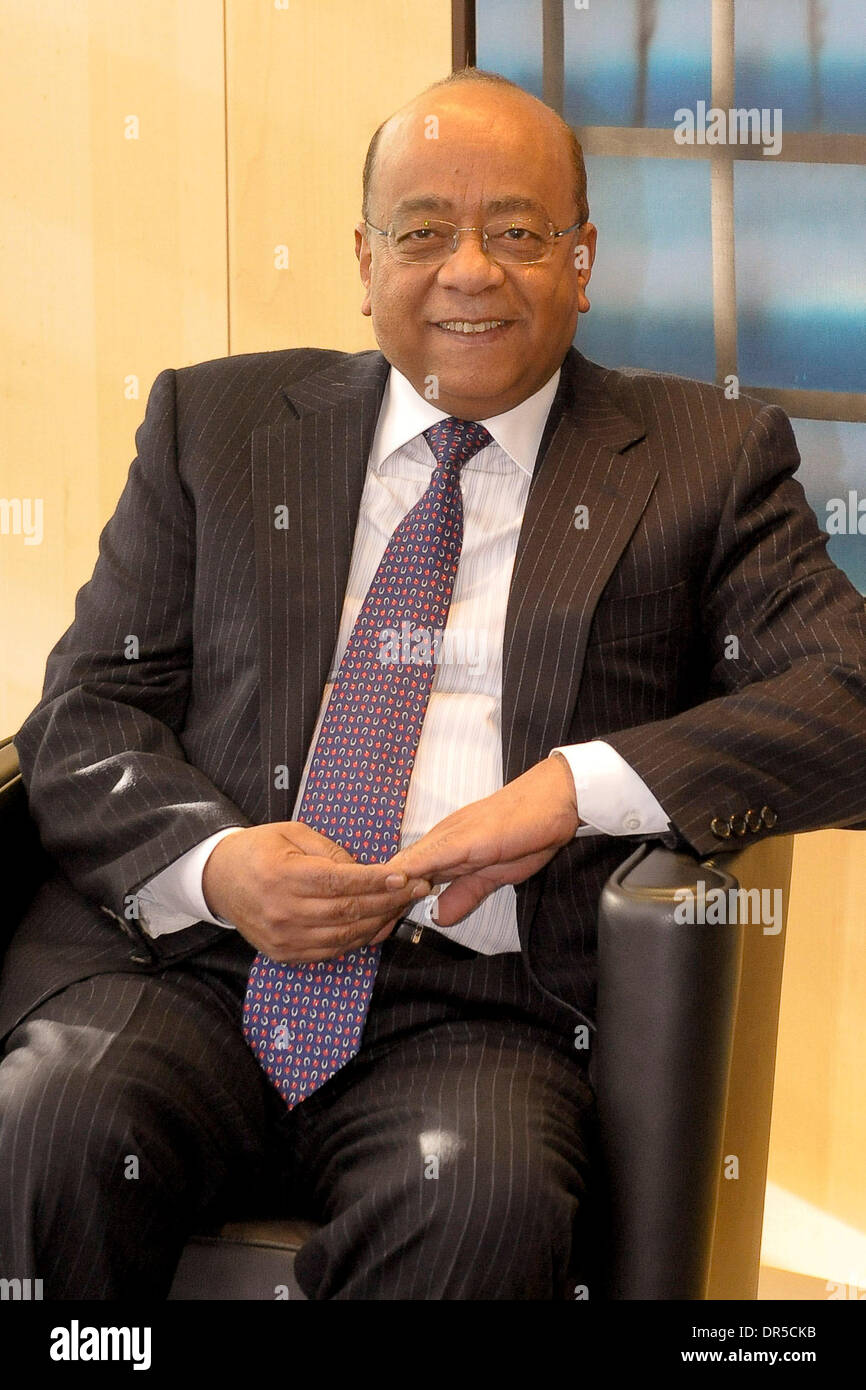
Mo Ibrahim’s early life started in Sudan, where he was born in 1946 in Khartoum. Growing up in a country that would later face political instability gave him early exposure to how leadership decisions affect everyday life.
His father worked in the cotton industry, which exposed him to structured systems, trade, and the importance of organized economies. That environment built a practical understanding of how industries and governments interact.
This stage of his life matters because it explains his later obsession with governance metrics. He did not arrive at that interest randomly. It came from observing how systems work when they are stable and how they fail when leadership breaks down.
Educational Background
He studied electrical engineering at the University of Alexandria in Egypt, where he built the foundation for his future in telecommunications.
He later moved to the United Kingdom for further studies, earning a master’s degree from the University of Bradford and a PhD in mobile communications from the University of Birmingham.
This educational path is critical because it positioned him ahead of the mobile telecom boom. At a time when mobile networks were still evolving, he was already deeply involved in the technical side of wireless communication systems.
In simple terms, while others were still catching up to mobile technology, he was helping shape it.
Career and Business Journey
His early career included working at British Telecom, where he gained hands-on experience in mobile network systems.
He later founded a consultancy firm called MSI, which focused on mobile network design. That company worked with telecom operators worldwide and positioned him as a serious expert in mobile infrastructure.
The real breakthrough came in 1998 when he launched Celtel International. This was a bold move at a time when many investors saw Africa as too risky for telecom expansion.
Here is where the story shifts.
Instead of avoiding risk, he leaned into it. Celtel focused on building mobile networks across multiple African countries, including Nigeria, Kenya, and Uganda. His approach was different because he insisted on transparency and refused to engage in corrupt practices, even when operating in challenging environments. That decision was not just ethical. It became a competitive advantage.
By 2005, Celtel had grown into one of Africa’s leading telecom companies and was sold to Kuwait-based MTC for about $3.4 billion. That deal transformed Mo Ibrahim into a billionaire and gave him the financial power to pursue a bigger mission.
Relationships and Family
Mo Ibrahim is married to Hania Ibrahim, and they have children together.
What stands out is not public drama or controversies, but stability. His family life has largely stayed out of the spotlight, which aligns with his personality. He is more focused on impact than attention.
This matters because it reinforces his credibility. In a world where many high-profile figures are constantly in the news for the wrong reasons, his consistency adds weight to his governance advocacy.
Rise to Global Recognition
In 2006, he established the Mo Ibrahim Foundation. This foundation became the centerpiece of his global influence.
The foundation introduced the Ibrahim Index of African Governance, which ranks African countries based on leadership performance. This includes factors like safety, rule of law, economic opportunity, and human development.
He also created the Ibrahim Prize for Achievement in African Leadership. This prize is one of the largest in the world, awarded to former African heads of state who demonstrated exceptional leadership.
The idea behind the prize is simple but powerful.
Reward leaders who govern well.
Encourage accountability.
Set a benchmark for future leaders.
This move positioned him as one of the most influential voices in governance discussions, not just in Africa but globally.
Net Worth
As of 2026, Mo Ibrahim’s net worth is estimated to be around $1.5 billion to $2 billion. Most of this wealth came from the sale of Celtel and his earlier telecom ventures.
Unlike many billionaires, his wealth story is not built on multiple industries. It is focused, precise, and tied to one major success.
What makes his financial profile interesting is how he uses his wealth. Instead of expanding into more businesses, he channels significant resources into governance initiatives, policy discussions, and leadership programs.
This approach shifts the narrative from wealth accumulation to influence and impact.
Governance, Advocacy, and Influence
Through his foundation, he regularly engages with governments, policymakers, and global institutions.
He speaks openly about corruption, leadership failure, and the need for accountability. His approach is data-driven, using the governance index to support his arguments.
He also collaborates with organizations like the United Nations and the World Bank to push governance reforms.
One key idea he promotes is that Africa’s challenges are not due to a lack of resources, but a lack of effective leadership. That message resonates because it is backed by data and real-world experience.
Politics and Controversy
He is known for criticizing African leaders who extend their time in power beyond constitutional limits. He has also questioned the lack of accountability in many governments.
However, there are no major personal scandals or controversies tied directly to him. His criticisms are usually framed as policy discussions rather than personal attacks.
This balance allows him to remain influential without being dismissed as politically biased.
His influence goes beyond business success, reaching into policy, leadership evaluation, and institutional reform.
In a continent where leadership often determines progress or decline, his work stands out as both practical and necessary. And that is why his name keeps coming up whenever governance in Africa is discussed seriously.