
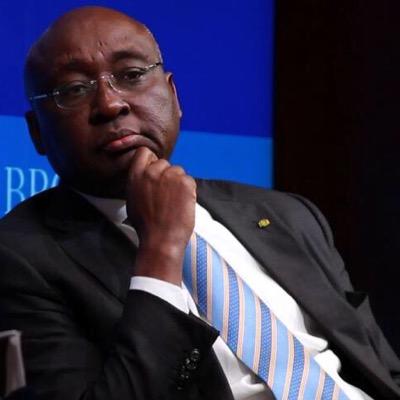
Donald Kaberuka was born on October 5, 1951, in Byumba, a region in northern Rwanda that at the time reflected both the simplicity and complexity of post-colonial Africa.
His early years were not defined by privilege but by exposure to the realities of a developing nation where economic opportunity was limited and political instability was never far away.
Growing up in Rwanda during a period of tension and transition shaped his worldview early. Like many Rwandans of his generation, he experienced displacement during ethnic conflicts in the late 1950s and early 1960s, which forced many families, including his, to seek refuge in neighboring countries.
Educational Background
Kaberuka’s academic journey is one of the clearest indicators of his future influence. He did not settle for local exposure alone. Instead, he pursued education across multiple countries, giving him a broad understanding of global economics.
He earned his undergraduate degree from the University of Dar es Salaam in Tanzania, one of East Africa’s most respected institutions. There, he studied economics at a time when African economies were trying to define their post-independence identities. This environment sharpened his analytical thinking and exposed him to real-world economic challenges.
He later moved to the United Kingdom to further his studies at the University of Glasgow, where he obtained both a Master’s degree and a PhD in Economics. This phase of his education introduced him to advanced economic theories, global financial systems and policy frameworks used in developed economies.
What stands out here is not just the degrees but the combination of African and Western academic exposure. That blend became a powerful tool later, allowing him to bridge local realities with global financial strategies.
Career and Business
Kaberuka did not jump straight into global leadership. His career started in academia, where he worked as a lecturer, sharing knowledge and refining his own understanding of economic systems. Teaching gave him the ability to simplify complex ideas, a skill that later became essential when dealing with policymakers and international stakeholders.
His transition into international finance came when he joined global institutions, including the World Bank. At the World Bank, he gained firsthand experience in development finance, working on projects that aimed to reduce poverty and support economic growth in developing countries.
However, his most defining professional chapter began when he returned to Rwanda after the 1994 genocide. The country was in ruins, economically and structurally. He was appointed Minister of Finance and Economic Planning, a role that placed him at the center of rebuilding a nation from the ground up.
During his tenure, Rwanda experienced significant economic reforms. He introduced policies that stabilized the economy, improved revenue collection, and restored investor confidence. This period demonstrated his ability to operate under extreme pressure while delivering measurable results.
The real turning point in Donald Kaberuka’s career came in 2005 when he was elected President of the African Development Bank. This role expanded his influence from a single country to the entire continent.
At the African Development Bank, he focused on several key areas:
- Infrastructure development across African nations
- Private sector growth to reduce dependence on foreign aid
- Regional integration to improve trade within Africa
- Financial stability during global economic crises
One of his most notable achievements was guiding African economies through the 2008 global financial crisis. While many regions struggled, African economies showed resilience, partly due to policies and financial buffers implemented under his leadership.
Relationships and Family
Donald Kaberuka has maintained a relatively private personal life, especially compared to many public figures. He is married and has children, but he has consistently kept family matters out of the spotlight.
This deliberate privacy reflects a personality focused more on impact than publicity. His leadership style mirrors this approach. He is known for being calm, analytical, and results-driven rather than attention-seeking.
His relationships, both personal and professional, have played a supportive role in his journey. Colleagues often describe him as someone who values collaboration, listens carefully, and builds consensus before making decisions. These traits became particularly important during his time leading multinational financial initiatives, where alignment among diverse stakeholders is critical.
Rise to Fame
Kaberuka’s rise was not sudden. It was built step by step through consistent performance in increasingly complex roles. His work in Rwanda laid the foundation, but his leadership at the African Development Bank brought him global recognition.
Under his presidency, the bank’s capital base expanded significantly, allowing it to fund larger and more impactful projects. He also strengthened partnerships with global institutions, ensuring that Africa had a stronger voice in international financial discussions.
His ability to combine technical expertise with strategic vision made him a respected figure not just in Africa but globally. He frequently participated in international forums, representing African interests and advocating for fairer economic policies.
After completing his tenure at the African Development Bank in 2015, he continued to influence development through advisory roles and board memberships in major organizations. His voice remains relevant in discussions about Africa’s economic future.
Net Worth
Estimating the exact net worth of Donald Kaberuka is challenging because he is not a typical business mogul with publicly traded assets or large personal enterprises. His wealth primarily comes from his long career in international finance, leadership roles, and advisory positions.
As of 2026, his estimated net worth is believed to be in the range of several million dollars. This figure reflects earnings from:
- Executive roles in global financial institutions
- Board memberships and consulting engagements
- Speaking engagements and advisory work
It is important to note that his financial profile is modest compared to that of private sector billionaires. However, his real value lies in influence rather than personal wealth. His decisions have impacted billions of dollars in development funding and shaped economic policies across multiple countries.
Politics and Controversy
Unlike many figures in high-level finance and governance, Kaberuka’s career has remained relatively free of major controversies.
His time as Rwanda’s Finance Minister and later as President of the African Development Bank did not attract significant scandals or allegations.
This does not mean his journey was without challenges. Leading financial reforms in a post-conflict nation and managing a continental bank naturally involved difficult decisions and criticisms. However, these were largely policy-related debates rather than personal controversies.
His reputation has remained that of a disciplined technocrat who prioritizes results over politics. This clean record has contributed significantly to his credibility and longevity in global financial circles.
The Bigger Picture
When you look at Donald Kaberuka, what stands out is not just the positions he held but the consistency of his impact. From rebuilding Rwanda’s economy to strengthening Africa’s financial backbone, his work follows a clear pattern of long-term thinking.
He represents a model of leadership that combines:
- Deep technical knowledge
- Real-world experience
- Strategic vision
- Commitment to sustainable growth
In a continent where development challenges are complex and often interconnected, this kind of leadership is rare and valuable.
His legacy is still unfolding, especially as Africa continues to push for economic independence, stronger institutions, and greater participation in global markets. The systems he helped build and the policies he influenced continue to shape that journey today.