
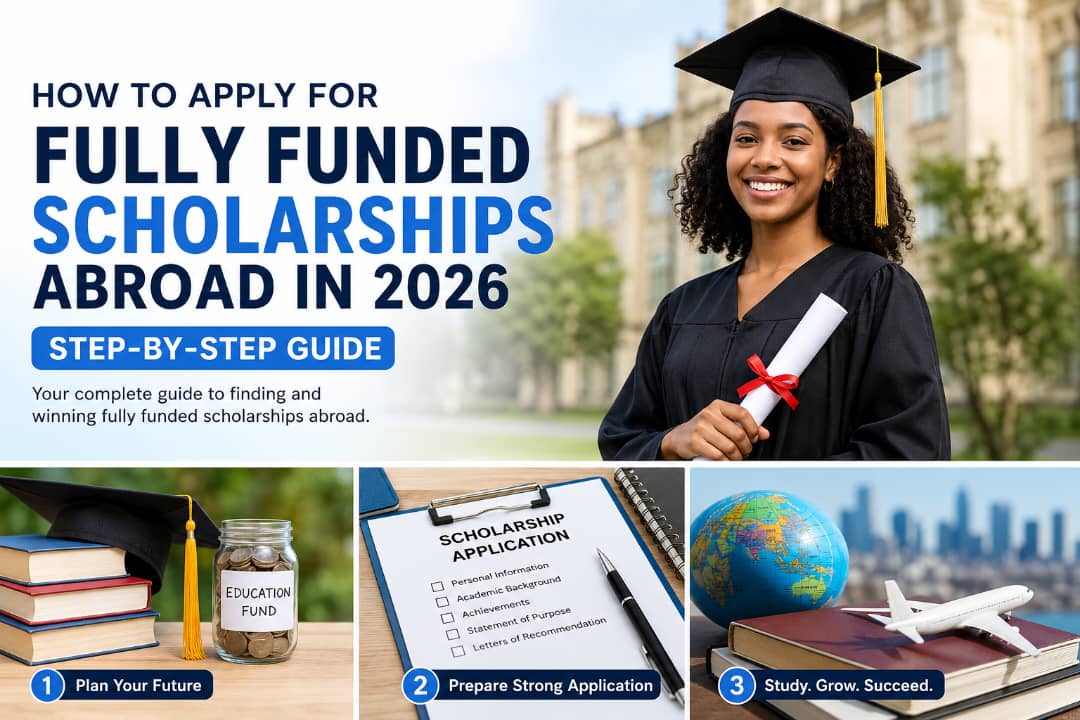
Studying abroad is a dream for millions of students, but the high cost of tuition, accommodation, travel, and living expenses often discourages qualified applicants. The good news is that thousands of fully funded scholarships are available every year for international students, making it possible to earn a world-class education without paying tuition fees.
In 2026, governments, universities, international organizations, and private foundations are expected to invest billions of dollars in scholarship programs designed to attract talented students from around the world. Whether you want to pursue a bachelor’s degree, master’s degree, PhD, or a professional research program, there are opportunities available in countries such as the United Kingdom, Canada, the United States, Australia, New Zealand, Germany, Sweden, the Netherlands, Japan, South Korea, and many others.
For Nigerian students and applicants from other developing countries, fully funded scholarships provide more than financial support. They open doors to quality education, international networking, career advancement, and, in some countries, opportunities for permanent residency after graduation.
However, winning a scholarship is not simply about having excellent grades. Scholarship committees carefully evaluate every application based on academic performance, leadership ability, work experience, community service, communication skills, and future career goals. Understanding what scholarship providers are looking for can significantly improve your chances of success.
This comprehensive guide explains everything you need to know about applying for fully funded scholarships abroad in 2026, including eligibility requirements, application procedures, required documents, common mistakes to avoid, and practical strategies that can help you stand out from thousands of applicants.
Whether this is your first scholarship application or you’ve been unsuccessful before, this guide will help you prepare a stronger application.
What Is a Fully Funded Scholarship?
A fully funded scholarship is a financial award that covers nearly every major expense associated with studying abroad. Unlike partial scholarships, which may only pay part of your tuition fees, fully funded scholarships are designed to remove the financial burden from successful applicants.
Although benefits vary by scholarship, many fully funded programs include:
– Full tuition fees
– Monthly living allowance
– Accommodation support
– Round-trip airfare
– Health insurance
– Visa application assistance
– Research grants (for postgraduate students)
– Book and study allowances
– Conference or travel funding where applicable
Some scholarships even provide relocation support and family allowances for postgraduate researchers.
Because of these generous benefits, competition is usually very high. Many prestigious scholarship programs receive tens of thousands of applications from students around the world each year.
Who Can Apply for Fully Funded Scholarships?
One of the biggest misconceptions is that scholarships are only available to students with perfect academic records. While strong academic performance is important, many scholarship providers also consider other qualities.
You may be eligible if you are:
– A secondary school graduate seeking an undergraduate degree
– A university graduate applying for a master’s program
– A master’s graduate seeking a PhD
– A young professional looking for advanced education
– A researcher pursuing international collaboration
– An applicant with leadership experience
– Someone actively involved in volunteer or community development activities
Many scholarship programs also prioritize applicants who demonstrate a commitment to contributing positively to their home country after completing their studies.
Popular Countries Offering Fully Funded Scholarships in 2026
Several countries consistently offer generous scholarship opportunities for international students.
United Kingdom
The UK remains one of the most popular destinations for scholarship applicants because of its globally recognized universities and government-funded scholarship schemes.
Students can study subjects such as:
– Engineering
– Medicine
– Public Health
– Law
– Artificial Intelligence
– Data Science
– Business Administration
– International Development
– Education
Many UK scholarships also provide leadership training and networking opportunities.
Canada
Canada continues to attract international students due to its excellent education system, multicultural environment, and post-study work opportunities.
Many Canadian scholarships support research-based master’s and doctoral programs, while universities also offer entrance scholarships for undergraduate students.
Australia
Australia provides numerous fully funded scholarships supported by both universities and the government. These scholarships cover tuition, living expenses, airfare, and research costs for qualified applicants.
New Zealand
New Zealand is increasingly becoming a preferred destination because of its safe environment, high-quality education, and excellent graduate employment opportunities.
Many scholarship recipients also benefit from post-study work visa pathways after graduation.
Germany
Germany offers tuition-free education at many public universities, making it one of the most affordable destinations for international students. Several scholarship programs further cover accommodation and living expenses.
Benefits of Winning a Fully Funded Scholarship
Receiving a fully funded scholarship goes far beyond financial assistance.
Some of the major benefits include:
Graduate Without Heavy Debt
Many international students spend years repaying education loans. Fully funded scholarships allow graduates to begin their careers without the burden of significant debt.
Access to World-Class Education
Scholarship recipients often study at internationally respected universities equipped with modern facilities, experienced professors, and cutting-edge research opportunities.
Better Career Opportunities
Graduating from a globally recognized institution can improve your employment prospects in both your home country and abroad.
Many employers value international education because it demonstrates adaptability, cross-cultural communication skills, and academic excellence.
Global Networking
Students build lifelong relationships with classmates, professors, researchers, industry professionals, and alumni from around the world.
These connections often lead to internships, research collaborations, and future employment opportunities.
Personal Growth
Living and studying in another country helps students develop independence, confidence, problem-solving skills, and a broader understanding of different cultures.
These experiences often become valuable assets throughout their personal and professional lives.
Why Scholarship Applications Get Rejected
Every year, thousands of highly qualified applicants fail to secure scholarships—not necessarily because they lack potential, but because they make avoidable mistakes during the application process.
Some of the most common reasons include:
– Applying after the deadline
– Submitting incomplete applications
– Poorly written personal statements
– Weak recommendation letters
– Failing to meet eligibility requirements
– Uploading incorrect documents
– Generic essays copied for multiple scholarships
– Ignoring application instructions
– Grammatical and spelling errors
– Lack of leadership or extracurricular evidence
Understanding these common mistakes before you apply can significantly improve your chances of success.
Step-by-Step Application Process and Required Documents
Applying for a fully funded scholarship can seem overwhelming, especially if it is your first time. Between finding the right opportunity, gathering documents, writing essays, and meeting deadlines, many applicants become discouraged before they even submit an application.
The good news is that most successful scholarship recipients follow a structured process. They prepare early, pay attention to details, and submit well-organized applications. By following the steps below, you can significantly improve your chances of receiving a scholarship offer in 2026.
Identify the Right Scholarship
The first step is choosing scholarships that match your academic background, career goals, and eligibility.
Instead of applying randomly to dozens of scholarships, focus on opportunities where you meet most or all of the requirements.
Consider factors such as:
– Your preferred country of study
– Degree level (Bachelor’s, Master’s, or PhD)
– Course or field of study
– Academic qualifications
– English language requirements
– Age limits (where applicable)
– Work experience requirements
– Scholarship benefits
– Application deadlines
Creating a shortlist of suitable scholarships allows you to dedicate more time to preparing high-quality applications.
Check the Eligibility Requirements Carefully
Many applications are rejected simply because applicants fail to read the eligibility criteria.
Before investing time in an application, confirm that you meet the requirements.
Common eligibility criteria include:
– Minimum academic qualifications
– Admission to an eligible university or program
– Nationality requirements
– English language proficiency
– Relevant work experience
– Leadership experience
– Community service or volunteer activities
– Research interests (for postgraduate applicants)
If you do not meet a scholarship’s basic requirements, it is usually better to focus your efforts on other opportunities.
Prepare All Required Documents
Most scholarship providers request similar documents, although requirements may vary.
Commonly required documents include:
Academic Transcripts
These provide a record of your academic performance and are often one of the first documents reviewed.
Ensure your transcripts are:
– Official
– Clear and legible
– Complete
– Properly certified if required
Degree Certificates
Graduates applying for postgraduate scholarships usually need copies of their degree certificates.
If you are in your final year, some scholarship providers may accept a provisional certificate or an official letter from your institution.
International Passport
A valid international passport is often required for identification.
If your passport will expire soon, consider renewing it before submitting your application.
Curriculum Vitae (CV)
Your CV should clearly highlight:
– Educational background
– Work experience
– Leadership roles
– Volunteer activities
– Awards and achievements
– Research experience
– Professional certifications
– Skills and languages
Keep it well-organized and relevant to the scholarship.
Personal Statement or Motivation Letter
This is one of the most important parts of your application.
It allows the scholarship committee to understand:
– Who are you
– Why did you choose your course
– Your career aspirations
– Why you deserve the scholarship
– How do you plan to contribute to your community or country after graduation
Avoid copying samples from the internet. Scholarship committees can often recognize generic or plagiarized essays.
Write a personal, authentic, and compelling story that reflects your unique experiences and ambitions.
Letters of Recommendation
Most scholarships require one to three recommendation letters.
Strong referees may include:
– University lecturers
– Professors
– Employers
– Supervisors
– Research mentors
Choose people who know your academic abilities, leadership qualities, work ethic, and character.
Give your referees enough time to write thoughtful recommendations instead of asking at the last minute.
English Language Test Results
Some universities require proof of English proficiency through tests such as IELTS, TOEFL, or PTE Academic.
However, many institutions now waive these requirements for applicants from English-speaking countries or those who completed their previous education in English.
Always confirm the language requirements for your chosen scholarship before registering for an exam.
Write a Strong Scholarship Essay
A scholarship essay can determine whether your application moves forward or is rejected.
An outstanding essay should:
– Tell your personal story
– Demonstrate leadership potential
– Explain your academic interests
– Highlight achievements
– Show resilience and determination
– Describe your long-term goals
– Explain how the scholarship will help you make a positive impact
Avoid writing what you think the selection committee wants to hear. Instead, focus on presenting an honest, well-structured narrative supported by real experiences.
Submit Your Application Before the Deadline
Never wait until the final day to submit your application.
Unexpected issues such as internet problems, website maintenance, or missing documents can prevent a successful submission.
Aim to submit at least one week before the official deadline whenever possible.
Before clicking the submit button, double-check that:
– Every required document has been uploaded.
– All information is accurate and consistent.
– Your essays are free from spelling and grammatical errors.
– Your contact details are correct.
– Your referees have submitted their recommendations, if required.
How to Find Legitimate Scholarship Opportunities
Unfortunately, fake scholarship websites and scams continue to target international students.
To protect yourself:
– Apply only through official university or scholarship websites.
– Never pay an application fee unless it is clearly required by the university (many scholarships are free to apply for).
– Avoid anyone promising guaranteed scholarship awards in exchange for money.
– Verify scholarship information through official announcements.
– Be cautious of emails requesting sensitive personal or banking information.
Legitimate scholarship providers are transparent about their requirements, selection process, and deadlines.
Start Preparing Early
One of the biggest advantages successful applicants have is time.
Many begin preparing six to twelve months before applications open. This gives them enough time to improve their CV, request recommendation letters, write strong essays, gather documents, and research suitable programs.
Early preparation also reduces stress and allows you to submit a polished application rather than rushing at the last minute.
Expert Tips to Increase Your Chances of Winning a Scholarship
1. Apply for Multiple Scholarships
Avoid relying on a single scholarship opportunity.
Every scholarship has different selection criteria, and applying to several programs increases your chances of receiving at least one offer.
Keep a spreadsheet to track:
– Scholarship name
– Country
– University
– Opening date
– Closing date
– Required documents
– Application status
Staying organized will help you avoid missed deadlines.
2. Maintain Strong Academic Performance
While not every scholarship requires perfect grades, a solid academic record demonstrates commitment and the ability to succeed in higher education.
If you’re still in school, continue working hard to improve your grades before applying.
3. Build Leadership Experience
Many prestigious scholarship programs seek future leaders.
Leadership experience can come from:
– Student associations
– Community projects
– Volunteer organizations
– Religious groups
– Workplace responsibilities
– Youth development initiatives
You don’t need to hold a major title. What matters is showing that you’ve made a meaningful contribution.
4. Volunteer in Your Community
Community service demonstrates compassion, initiative, and a willingness to solve real-world problems.
Activities such as mentoring students, organizing health campaigns, environmental clean-ups, or supporting local charities can strengthen your application.
5. Tailor Every Application
One of the biggest mistakes applicants make is submitting the same essay for every scholarship.
Each scholarship has its own goals and values. Read the application instructions carefully and customize your personal statement to reflect what the scholarship provider is looking for.
6. Improve Your Communication Skills
A well-written application reflects professionalism.
Before submitting:
– Proofread your essays.
– Check for grammar and spelling errors.
– Ask someone you trust to review your application.
– Ensure your writing is clear, concise, and easy to understand.
Strong communication can leave a lasting impression on the selection committee.
Common Scholarship Application Mistakes to Avoid
Many qualified candidates are rejected because of avoidable errors.
Some of the most common mistakes include:
– Applying after the deadline.
– Ignoring eligibility requirements.
– Submitting incomplete applications.
– Uploading the wrong documents.
– Using generic or copied essays.
– Providing inaccurate information.
– Choosing referees who barely know you.
– Failing to explain long-term career goals.
– Not following formatting or word-count instructions.
– Waiting until the last minute to apply.
Taking time to review your application thoroughly can prevent these mistakes.
Frequently Asked Questions (FAQs)
Can I apply for scholarships without work experience?
Yes. Many undergraduate scholarships do not require work experience. However, some postgraduate scholarships may prefer applicants with professional or leadership experience.
Can I apply for more than one scholarship at the same time?
Yes. In fact, applying for multiple scholarships is recommended, provided you meet the eligibility requirements for each one.
Do I need IELTS or TOEFL?
Not always.
Some universities require proof of English language proficiency, while others waive this requirement for applicants from English-speaking countries or those who previously studied in English.
Always check the specific requirements of the scholarship or university.
Are fully funded scholarships really free?
In most cases, yes.
A fully funded scholarship generally covers tuition fees and other major educational expenses. However, you should carefully review the scholarship benefits to understand exactly what is included.
Can Nigerian students apply for international scholarships?
Absolutely.
Thousands of Nigerian students receive fully funded scholarships every year to study in countries such as the United Kingdom, Canada, Australia, Germany, Japan, the United States, and many others.
The key is to prepare early, meet the eligibility requirements, and submit a strong application.
How early should I begin preparing?
Ideally, start preparing six to twelve months before the application deadline.
This gives you enough time to:
– Research suitable scholarships.
– Prepare required documents.
– Improve your CV.
– Request recommendation letters.
– Write and revise your personal statement.
Early preparation often results in stronger applications.
Conclusion
Winning a fully funded scholarship is not reserved for a select few. Every year, thousands of students from Nigeria and other countries secure life-changing opportunities because they prepare thoroughly, stay organized, and submit high-quality applications.
While competition is intense, determination, careful planning, and attention to detail can significantly improve your chances of success.
Remember that rejection is not the end of your journey. Many successful scholarship recipients applied multiple times before finally receiving an offer. Learn from each experience, strengthen your application, and continue pursuing your academic goals.
If you remain committed, continue building your skills, and apply strategically, studying abroad on a fully funded scholarship can become a reality in 2026.
Disclaimer
Scholarship requirements, eligibility criteria, funding benefits, and application deadlines may change from year to year. Always verify the latest information on the official website of the scholarship provider or university before submitting your application. Never pay money to individuals or agencies claiming they can guarantee you a scholarship, as legitimate scholarship programs follow transparent and merit-based selection processes.