
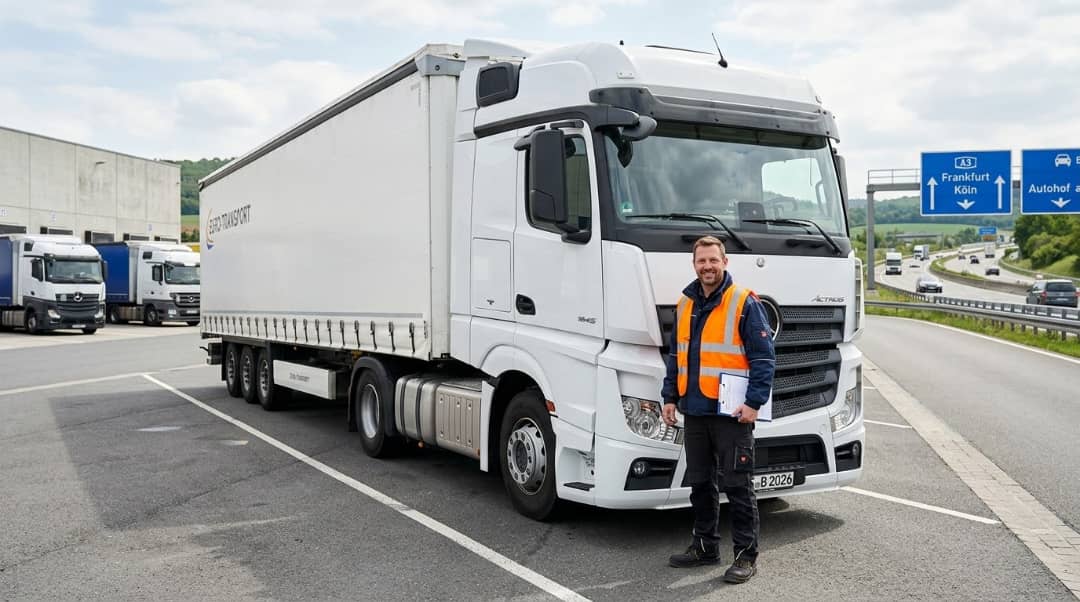
Germany relies on truck drivers to move goods between manufacturers, distribution centers, supermarkets, construction sites, and customers. These jobs are available in different parts of the transport industry, from local deliveries to long-distance freight across Germany and other European countries.
For people hoping to work in Germany, truck driving can be a career option worth exploring. However, applicants need to understand the salary, driving license rules, and immigration requirements before applying, particularly if they are currently living outside the European Union.
How Much Do Truck Drivers Earn in Germany?
Truck driver salaries depend on experience, location, employer, and the type of transport involved. Long-distance driving, specialist cargo and additional working hours may affect total earnings.
Germany’s Federal Employment Agency reports a median gross monthly salary of €3,196 for professional drivers transporting goods by truck. That is approximately €38,352 per year before tax.
The agency’s reported middle salary range is approximately €2,743 to €3,787 per month before tax. These figures are a national benchmark rather than a promise of what every employer will pay.
You can check the figures using the official Federal Employment Agency salary database.
Before accepting an offer, check the basic salary, working hours, overtime arrangements and any additional payments for overnight trips. Also confirm whether accommodation or meals are provided, rather than assuming they are included.
What Do Truck Drivers Do in Germany?
The duties depend on the employer and the goods being transported. Common responsibilities include:
- Driving heavy goods vehicles between warehouses, factories, distribution centers and delivery locations.
- Loading and unloading goods where required and ensuring cargo is secured correctly.
- Checking tyres, lights, brakes and other important vehicle components before journeys.
- Following assigned routes, delivery schedules and road safety regulations.
- Keeping delivery records and completing transport documentation.
- Following driving-time, rest-period and tachograph rules.
- Reporting vehicle faults, delays, accidents or damaged goods to the employer.
Some positions involve returning to the same depot every day, while others require overnight stays or several days on the road. Applicants should check the route pattern and working schedule in each job advertisement.
Requirements for Truck Driver Jobs in Germany
Employers set their own recruitment criteria, but applicants should pay particular attention to these requirements.
1. A suitable heavy-vehicle driving license
Truck-driving positions commonly require a category C or CE license. Category C generally covers heavy trucks, while category CE covers qualifying truck-and-trailer combinations. The exact license required depends on the vehicle and job.
2. Professional driver qualification
Commercial truck drivers generally need the applicable professional qualification for the vehicle category. In Germany and the EU, this may involve an initial qualification or accelerated initial qualification, with further training requirements during a driver’s career.
3. Relevant driving experience
Some employers recruit experienced drivers, while others may consider applicants who are willing to complete additional training. Experience in freight transport, delivery operations, or handling specialist cargo can be useful.
4. Safe driving and responsible work habits
Employers need drivers who can protect their cargo, follow traffic rules, manage delivery schedules, and carry out vehicle checks. A good driving record may strengthen an application.
5. Language and communication skills
German can be useful when communicating with dispatchers, warehouse staff, customers and authorities. However, the language requirement varies by employer and job. Do not assume that every vacancy requires fluent German—or that every employer will accept English alone.
Can Applicants from Nigeria Get Truck Driver Jobs in Germany?
Yes, Nigerian applicants can explore truck-driving opportunities in Germany. However, being offered a job and being legally qualified to drive a commercial truck in Germany are two different things.
Germany has specific immigration provisions for professional drivers from non-EU countries. The route available to an applicant depends partly on whether they already hold the required EU or EEA driving license and professional qualification.
There are two important situations to understand.
If you already have the required professional driving qualifications: You may be able to apply through the relevant employment and visa process, provided you meet the applicable requirements.
If you hold a Nigerian heavy-vehicle license but do not have the required German or EU license and professional qualification: A specific route may allow an employer to recruit you initially for alternative work while you complete the necessary qualification steps. This is subject to official approval and conditions. The employer must arrange the required training and licensing process, which must be achievable within 15 months, and provide a concrete truck-driving job offer for after you qualify. You cannot work as a professional truck driver under this arrangement before obtaining the required license and qualification.
Your Nigerian license should not be assumed to convert automatically into a German truck license. The applicable requirements and tests must be checked before you make plans or pay for training.
Read the German government’s official guide to special regulations for professional drivers.
Is German Language Necessary?
There is no single language rule that applies to every truck-driving vacancy. Some employers may accept drivers with basic German or English, while others need stronger German communication skills because of customer contact, documentation or safety procedures.
For applicants who need to complete German driving qualifications, the language needed for training and examinations is an important practical consideration. Learning German before applying can improve your ability to communicate at work and may give you access to more vacancies.
What Should You Prepare Before Applying?
Before sending applications, organize the documents and information employers are likely to request:
- An up-to-date CV showing your driving experience and employment history.
- A copy of your current driving license and its vehicle categories.
- Evidence of professional driving experience, where available.
- Copies of relevant training certificates or professional qualifications.
- A valid passport for the immigration process.
- References or driving records, if requested by the employer.
Do not pay a recruiter simply because they promise a German job or visa. First confirm the employer, read the employment contract carefully and verify the immigration route through official German sources.
The next step is to identify vacancies that match your license, experience, and eligibility, then check whether the employer is prepared to recruit applicants from outside the EU.
Where to Find Truck Driver Jobs in Germany
Finding truck driver jobs in Germany requires more than sending your CV to every transport company you find online. If you are applying from Nigeria or another country outside the EU, you need to look for employers who are willing to recruit internationally and understand the requirements for employing non-EU professional drivers.
The following websites are useful starting points for finding genuine vacancies.
1. Federal Employment Agency
The German Federal Employment Agency operates a public job portal where employers advertise vacancies across the country.
Search for truck driver vacancies here: Truck driver jobs on the Federal Employment Agency portal.
Useful German search terms include:
- LKW-Fahrer — truck driver.
- Berufskraftfahrer — professional driver.
- Kraftfahrer — driver, often used for commercial driving jobs.
- Fernverkehr — long-distance transport.
- Nahverkehr — local or regional transport.
Read each advertisement carefully. Some positions require applicants to already have a German or EU driving license, while others may have different entry requirements. Contact the employer to confirm whether applications from outside the EU are considered.
2. Make it in Germany
Make it in Germany is the German government’s official portal for international professionals. It provides job listings and information about working and living in Germany.
Use the portal to search for transport-related vacancies and review the requirements before applying. You should also read its official guidance on special regulations for professional drivers.
3. EURES
The EURES job mobility portal provides information about jobs and working conditions across European countries.
Search for truck driving, freight transport, and logistics vacancies in Germany. Check the employer’s application instructions and confirm whether the position is open to candidates who currently live outside Europe.
4. Apply directly to transport and logistics companies
You can also search for vacancies on the career pages of German logistics businesses and freight operators.
When researching a company, use its official website rather than relying solely on recruitment posts shared on social media. Look for a careers section, contact details, and a clear description of the job.
Do not assume a company recruits internationally simply because it advertises truck driver positions. Ask about overseas recruitment and the license requirements before preparing a full application.
How to Apply for Truck Driver Jobs in Germany
Follow these steps when applying.
Step 1: Check whether you meet the job requirements
Read the vacancy and identify the required license category, driving experience, language skills and professional qualifications.
If you hold a Nigerian license, state the category accurately in your application. Do not claim to possess a German category C or CE license unless you actually have one.
Step 2: Prepare a professional CV
Your CV should make it easy for an employer to assess your driving experience.
Include:
- Your full name and professional contact details.
- The driving license categories you currently hold.
- Your years of truck-driving experience.
- The types of vehicles you have driven.
- Your experience with local delivery, long-distance transport, or specialist cargo.
- Relevant training, safety certificates and professional references.
- Your language skills.
Use a clear format and keep the information relevant to the vacancy. If you have limited experience, explain your actual driving background honestly rather than exaggerating your qualifications.
Step 3: Write a short application letter
Explain why you are interested in the position, what vehicles you have experience driving and how your skills match the employer’s requirements.
If you are applying from Nigeria, mention this clearly. You can ask whether the employer considers non-EU applicants and whether it supports the necessary employment approval and license qualification process.
Step 4: Submit your application through the official channel
Follow the instructions in the job advertisement. Some employers accept applications through an online form, while others request a CV and supporting documents by email.
Keep a record of the vacancies you apply for, the company name, the date, and any response you receive. This helps you follow up professionally without sending repeated applications to the same employer.
Step 5: Confirm the employment conditions
Before accepting an offer, ask the employer to clarify:
- Gross monthly salary and expected working hours.
- Whether overtime and overnight allowances are paid separately.
- Whether the job involves local or long-distance routes.
- The required driving license and professional qualification.
- Whether the employer recruits applicants from your country.
- Who pays for license conversion, training, and examinations.
- Whether accommodation or relocation support is available.
Make sure the written contract reflects the agreed terms.
Documents to Prepare
Depending on the employer and your immigration route, you may need:
- A valid international passport.
- A current CV and application letter.
- Your existing heavy-vehicle driving licence.
- Evidence of professional driving experience.
- Relevant training or qualification certificates.
- Driving records or references, if requested.
- A signed employment contract or formal job offer.
- Documents requested for the visa application.
Prepare clear scans of your documents, but do not send sensitive information to an unverified recruiter. The German mission responsible for your application will confirm the documents required for your specific case.
Work Visa Requirements for Truck Drivers
Nigerian citizens generally need the appropriate visa and residence authorization to take up employment in Germany.
The route depends on your qualifications and driving license. Germany has special provisions for professional drivers from non-EU countries, including a route under which an employer may hire a candidate for alternative work while the candidate obtains the required German driving license and professional qualification.
Under that arrangement, the employment contract must provide for the qualification process, the necessary steps must be achievable within 15 months, and the employer must guarantee a specific professional driving job after the requirements are met. You cannot drive professionally under this arrangement until you have the required license and qualification.
Read the official German government guidance for professional drivers before accepting an offer.
For general visa information, visit the German Federal Foreign Office. Follow the instructions of the German mission responsible for applicants residing in Nigeria.
A job offer does not guarantee visa approval. The authorities will assess your application under the rules applicable to your circumstances.
How to Avoid Truck Driver Job Scams
Be cautious when searching for overseas driving jobs. Fraudulent recruiters may use the names of real transport companies to make false offers.
Protect yourself by following these precautions:
- Verify the employer: Find the company’s official website and confirm that the vacancy is genuine.
- Be wary of guaranteed visas: No private recruiter can guarantee that German authorities will approve your visa.
- Do not pay for a promised job: Treat requests for large upfront payments to secure employment, a contract, or a visa as a serious warning sign.
- Read the contract: Confirm the employer’s identity, salary, work location and conditions before signing.
- Verify immigration instructions: Use official German government information rather than relying entirely on a recruitment agent’s claims.
- Keep your documents secure: Do not hand over your original passport to an unverified recruiter.
If an offer appears unusually generous or promises immediate travel without checking your licence and qualifications, investigate it carefully before proceeding.
Skills German Employers Look For
Alongside the required driving license and professional qualifications, employers may look for these skills:
- Safe vehicle handling: The ability to operate heavy vehicles responsibly in different traffic and weather conditions.
- Knowledge of road safety: Understanding vehicle inspections, load securing, driving-time rules and rest periods.
- Time management: Delivering goods according to schedules while complying with legal driving limits.
- Basic vehicle checks: Identifying obvious mechanical problems and reporting faults before they become serious.
- Communication: Following instructions from dispatchers, completing delivery paperwork and communicating delays.
- Reliability: Arriving on time, protecting cargo and following company procedures.
If you have experience with articulated trucks, refrigerated transport, construction materials or other specialized loads, explain that experience in your CV when it matches the job.
How to Improve Your Chances of Getting Hired
Apply for jobs that match your actual qualifications. Check the required license category before applying. A vacancy requiring a CE license may not be suitable if you only hold a license for a smaller vehicle.
Learn some German. Even when an employer accepts English, basic German can help you communicate at work and prepare for training or examinations.
Make your driving experience clear. List the vehicle types you have driven, your years of experience, and the responsibilities you handled. Avoid vague claims such as “experienced driver” without supporting details.
Confirm overseas recruitment early. Ask whether the employer considers candidates living in Nigeria and whether it can support the relevant qualification process. This saves time when a vacancy is intended only for people who already have permission to work in Germany.
Understand the license process before spending money. Your current license, the vehicle category, and the applicable German rules will determine what you need to do. Confirm the requirements through official sources before paying an agent or training provider.
Common Mistakes to Avoid
Applicants can lose opportunities by making avoidable errors. Watch out for these problems:
- Applying without checking the license category required.
- Assuming a Nigerian heavy-vehicle license automatically qualifies them to drive a commercial truck in Germany.
- Believing that every truck-driving vacancy offers visa sponsorship.
- Sending the same generic CV to every employer.
- Paying an agent who promises guaranteed employment or visa approval.
- Accepting an offer without confirming salary, hours, accommodation, and other conditions in writing.
- Ignoring the language or professional qualification requirements.
The safest approach is to verify the vacancy, understand the qualification route, and keep all agreements in writing.
Frequently Asked Questions
Can I get a truck driver job in Germany from Nigeria?
Yes, it is possible, provided you find an employer willing to recruit you, and you meet the applicable employment, immigration, and professional driving requirements. Not every vacancy is open to applicants outside the EU.
Do I need a German truck-driving licence before applying?
Not necessarily for every recruitment route. Germany has special provisions for certain non-EU professional drivers who still need to obtain the required German licence and professional qualification. However, you must meet the conditions of the applicable route, and you cannot drive professionally until you hold the required qualifications.
Read the official German professional driver guidance.
How much do truck drivers earn in Germany?
Germany’s Federal Employment Agency reports a median gross monthly salary of approximately €3,196 for professional goods-transport drivers. Actual pay varies with experience, employer, location, and the type of work. Check the official salary database for the current figures.
Is German language compulsory?
The requirement depends on the employer and the job. Some employers may accept basic German or English, while others require stronger German communication skills. German may also be important for training and professional qualification examinations.
Where can I find genuine truck driver vacancies?
Start with the Federal Employment Agency job portal, the official Make it in Germany job listings, and EURES. Confirm that the specific employer accepts applications from outside the EU.
Does getting a job offer guarantee a German work visa?
No. A job offer is only one part of the process. You must satisfy the applicable immigration and qualification requirements, and the relevant authorities decide whether to approve your application.
Conclusion
Truck driver jobs in Germany may offer opportunities for qualified drivers, but applicants should look beyond salary advertisements. The right driving license, professional qualification, genuine employer, and appropriate work authorization are essential.
If you are applying from Nigeria, begin with verified vacancies, check the employer’s overseas recruitment policy and confirm your licensing route before paying for recruitment or training. This will help you focus on opportunities you can realistically pursue.
Disclaimer
Salary figures, job vacancies, licensing rules, and visa requirements may change. Verify all details with official German authorities and employers before applying. CareerOpportune does not guarantee employment or visa approval.