
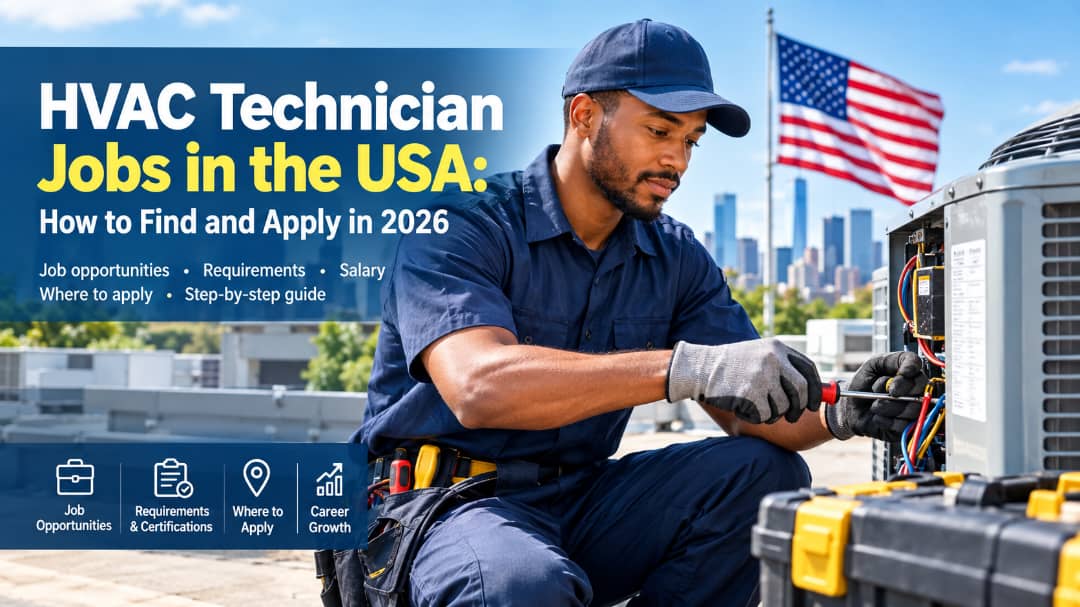
The HVAC industry in the United States is experiencing sustained growth, with thousands of job openings available for qualified technicians across residential, commercial, and industrial sectors. If you are searching for HVAC technician jobs in the USA, understanding the exact requirements, qualifications, salary expectations, and application process can significantly improve your chances of landing a position quickly. This comprehensive guide provides everything you need to know to start or advance your HVAC career in 2026.
Understanding the HVAC Technician Role in the United States
HVAC technicians install, maintain, and repair heating, ventilation, air conditioning, and refrigeration systems in homes, offices, hospitals, data centers, and industrial facilities. The work is physically demanding but offers strong job security, competitive pay, and clear career progression. Technicians may specialize in residential systems such as split units and furnaces, or commercial systems including rooftop units, chillers, and building automation controls.
The role requires a combination of mechanical aptitude, electrical knowledge, problem-solving skills, and customer service ability. Technicians must follow safety protocols, comply with environmental regulations, and stay current with evolving technology and efficiency standards.
Minimum Requirements for HVAC Technician Positions
Employers across the United States have consistent baseline requirements for HVAC technician candidates. Meeting these minimum standards is essential before applying for positions.
Most entry-level HVAC job postings require candidates to be at least 18 years old with a high school diploma or GED equivalent. Physical fitness is critical, as technicians regularly lift equipment weighing 50 pounds or more, work in confined spaces, climb ladders, and stand for extended periods. A valid U.S. driver’s license with a clean driving record is typically mandatory, as many employers provide company vehicles for service calls.
Legal authorization to work in the United States is non-negotiable. Employers must verify work eligibility through the I-9 form, requiring documentation such as a U.S. passport, permanent resident card, or valid work visa. Most companies also conduct background checks and drug screenings as part of the hiring process.
Basic mathematical and reading comprehension skills are necessary for taking measurements, performing electrical calculations, and understanding technical manuals. Some employers prefer candidates who already own basic hand tools including screwdrivers, pliers, wrenches, and a multimeter, though many provide tools for new hires.
Flexibility regarding work schedule is often required. HVAC work peaks during extreme weather seasons, meaning technicians must be willing to work evenings, weekends, holidays, and participate in on-call rotations for emergency service calls.
Educational Pathways and Training Requirements
There are three primary pathways to qualify for HVAC technician positions in the United States, each with distinct advantages depending on your circumstances and career goals.
Trade School and Technical College Programs
Trade school programs offer focused HVAC training in a condensed timeframe. These programs typically run between six months and two years, leading to a certificate or associate degree in HVAC/R technology. The curriculum covers electrical systems, refrigeration cycles, heating equipment, controls, safety protocols, and preparation for EPA 608 certification exams.
Graduates of accredited programs often have an advantage when applying for entry-level positions, as employers recognize the structured training and hands-on lab experience. Many schools maintain relationships with local contractors and facilitate job placement assistance for graduates.
Apprenticeship Programs
Apprenticeships represent the gold standard for HVAC training, combining paid on-the-job experience with classroom instruction over three to five years. Programs are frequently administered by labor unions such as the United Association for plumbers and pipefitters, SMART for sheet metal workers, or through contractor associations and community colleges.
Apprentices earn wages while learning from experienced technicians, gradually taking on more complex tasks as their skills develop. Upon completion, apprentices typically qualify for journeyman-level positions with significantly higher earning potential. Competition for apprenticeship slots can be intense, so applying early and demonstrating a strong work ethic is essential.
On-the-Job Training as a Helper
Some technicians enter the field by starting as HVAC helpers or installers, learning skills directly from experienced technicians. This pathway requires no formal education beyond high school but may take longer to reach full technician status. Helpers assist with installations, perform basic maintenance tasks, and gradually learn troubleshooting and repair skills.
While this approach allows immediate income without tuition costs, career advancement may be slower compared to formal training programs. Many helpers eventually enroll in trade school or apprenticeships to accelerate their development and increase earning potential.
Essential Certifications and Credentials
Certifications validate your skills and demonstrate compliance with federal and industry standards. Certain credentials are mandatory, while others significantly enhance employability and earning potential.
EPA Section 608 Certification
The Environmental Protection Agency requires all technicians who handle refrigerants to obtain EPA Section 608 certification. This federal mandate applies nationwide, and employers cannot legally assign refrigerant-related tasks to uncertified technicians.
The certification has four types: Type I for small appliances, Type II for high-pressure systems, Type III for low-pressure systems, and Universal covering all equipment types. Most technicians pursue Universal certification to maximize job flexibility and employment opportunities.
Exam preparation courses are available through trade schools, online providers, and industry organizations. The test covers refrigerant handling procedures, environmental regulations, safety protocols, and recovery equipment operation.
NATE Certification
North American Technician Excellence certification is the leading voluntary credential in the HVAC industry. While not legally required, NATE certification signals advanced competency and commitment to professional development.
Technicians must pass a core exam covering fundamental HVAC knowledge plus specialty exams in areas such as air conditioning, heat pumps, gas furnaces, or commercial refrigeration. Many employers offer salary increases or bonuses for NATE-certified technicians, and some insurance companies provide reduced rates for businesses employing NATE professionals.
Additional Valuable Credentials
HVAC Excellence certifications provide specialized credentials in areas like electrical systems, heating systems, and light commercial air conditioning. OSHA 10-hour safety certification demonstrates knowledge of workplace safety standards and is required by some employers, particularly in commercial and industrial settings.
Manufacturer-specific training programs from companies like Carrier, Trane, and Lennox provide product-specific expertise that can be valuable when working for authorized dealers or service providers.
HVAC Technician Salary Expectations Across the United States
Compensation for HVAC technicians varies based on experience level, geographic location, specialization, and employer type. Understanding salary ranges helps set realistic expectations and informs decisions about relocation or specialization.
The median annual wage for HVAC technicians in the United States is approximately sixty thousand dollars, with entry-level positions typically starting between thirty-eight thousand and forty-five thousand dollars annually. Experienced technicians with five or more years in the field commonly earn between sixty-five thousand and eighty-five thousand dollars per year.
Top earners, including specialists in commercial refrigeration, building automation systems, or union members in high-cost regions, can exceed ninety thousand to one hundred thousand dollars annually when accounting for overtime, on-call pay, and performance bonuses. The average hourly rate hovers around thirty dollars per hour, though this figure fluctuates significantly by state and metropolitan area.
States with the highest HVAC technician wages include Alaska, District of Columbia, Hawaii, Massachusetts, California, New York, and Washington. Major metropolitan areas such as New York City, San Francisco, Boston, Seattle, Chicago, and Los Angeles typically offer above-average compensation to offset higher living costs.
Beyond base salary, many employers provide comprehensive benefits packages including health insurance, retirement plans with employer matching, paid training and certification reimbursement, company vehicles, uniforms, and tool allowances. Overtime opportunities during peak seasons can substantially increase annual earnings.
Official Sources for Finding HVAC Technician Job Openings
Using official and verified sources protects you from job scams while connecting you with legitimate employment opportunities. The following platforms represent safe, government-backed, and industry-recognized channels for finding HVAC positions.
Federal Government Job Portals
USAJobs.gov serves as the official employment site for the United States federal government. While most HVAC positions exist in the private sector, federal facilities including military bases, Veterans Affairs hospitals, and government buildings employ HVAC technicians for maintenance and operations roles. Creating a profile on USAJobs allows you to search for federal HVAC openings nationwide and receive alerts for new postings.
CareerOneStop.org is sponsored by the U.S. Department of Labor and provides access to hundreds of thousands of job listings along with connections to state employment and training programs. The site includes occupation-specific resources for HVAC careers, local training providers, and employer contacts verified through American Job Centers.
USA.gov aggregates official government websites at federal, state, and local levels. Many state and municipal governments post civil service HVAC positions on their official employment portals linked through USA.gov. These positions often include strong benefits, pension plans, and job security.
State Workforce Development Agencies
Every state operates a workforce development agency that maintains official job boards connecting job seekers with verified employers. These agencies receive funding from the U.S. Department of Labor and vet participating employers to reduce fraud risk.
Examples include CalJOBS in California, WorkInTexas in Texas, NY HelloWorks in New York, and FloridaJobs.org in Florida. Search for your state name followed by workforce development or employment security department to locate your official state job portal.
These platforms often include apprenticeship listings, registered training programs, and connections to local employers actively hiring HVAC technicians. Many states also operate reemployment assistance programs that provide additional support for career changers.
Registered Apprenticeship Programs
The U.S. Department of Labor maintains Apprenticeship.gov, the official federal resource for finding registered apprenticeship programs across all trades, including HVAC. Registered apprenticeships meet federal quality standards, provide structured training, and lead to nationally recognized credentials.
Labor unions, including the United Association, SMART, and local building trades councils, administer many registered apprenticeships. Contact your nearest union hall directly through their official websites to inquire about upcoming application cycles and eligibility requirements.
Industry Association Job Boards
Professional HVAC associations operate job boards specifically for the heating, cooling, and refrigeration industry. These platforms connect job seekers with reputable employers committed to industry standards and professional development.
The Air Conditioning Contractors of America maintains a career center featuring positions with member contractors who adhere to ACCA business standards and technical guidelines. The Refrigeration Service Engineers Society operates a job board targeting technicians with commercial and industrial refrigeration experience. The National Comfort Institute provides training resources and occasionally posts career opportunities with partner organizations.
Local and state HVAC contractor associations often maintain member directories and job listing sections on their websites. Search for HVAC contractors’ association followed by your state or metropolitan area to find regional resources.
Verified Private Job Platforms
While not government-operated, certain private job platforms implement verification processes and partner with official workforce agencies to ensure listing authenticity.
Indeed aggregates postings from company career pages and verified employers, offering one of the largest collections of HVAC job openings. LinkedIn Jobs features positions from established companies with verified business profiles, particularly valuable for commercial and industrial opportunities.
ZipRecruiter partners with employers directly and uses matching algorithms to connect candidates with relevant openings. Glassdoor combines job listings with company reviews and salary data, helping you evaluate potential employers before applying.
When using private platforms, always verify that job postings link to official company career pages and that recruiter communications come from corporate email domains rather than free providers like Gmail or Yahoo.
Direct Employer Career Pages
Applying directly through company websites represents one of the safest application methods. National residential service providers including Service Experts, One Hour Heating and Air Conditioning, and ARS Rescue Rooter maintain dedicated career sections on their official websites.
Commercial and industrial mechanical contractors such as Johnson Controls, Carrier, Trane, EMCOR, and Siemens regularly post openings for technicians with commercial experience. Search for company names followed by careers or employment to locate official application portals.
Direct applications bypass third-party aggregators and go straight to internal recruiting teams, often expediting the hiring process. Bookmark career pages of companies you are interested in and check them regularly for new postings.
American Job Centers and Local Workforce Boards
American Job Centers operate in communities nationwide, providing free employment services including job search assistance, resume workshops, and connections to local employers. These centers are funded through the Workforce Innovation and Opportunity Act and partner with state workforce agencies.
Locate your nearest American Job Center through CareerOneStop.org by entering your zip code. Staff can help you identify HVAC employers actively hiring in your area, connect you with training programs, and provide guidance on application processes.
Local workforce development boards often maintain relationships with regional HVAC contractors and may know of unadvertised openings. Building relationships with workforce counselors can provide access to opportunities not posted on public job boards.
How to Apply for HVAC Technician Positions
A strategic application approach significantly improves your chances of securing interviews and job offers. Following a systematic process ensures you present yourself professionally and maximize opportunities.
Preparing Your Application Documents
Before applying, assemble all necessary materials to streamline the process. Your resume should be tailored specifically for HVAC positions, emphasizing relevant skills, certifications, and experience. Create a master resume containing all your qualifications, then customize versions for specific job types such as residential service, commercial maintenance, or installation-focused roles.
Gather copies of all certifications including EPA 608, NATE, OSHA cards, and any manufacturer training credentials. Obtain transcripts or completion certificates from HVAC training programs. Prepare a list of three to five professional references including former supervisors, instructors, or colleagues who can verify your work ethic and technical abilities.
Ensure you have valid identification and work authorization documents readily available for I-9 verification once hired. Many employers request these documents during the interview process or upon extending job offers.
Crafting an Effective HVAC Resume
Your resume must quickly communicate your qualifications to hiring managers who may review hundreds of applications. Use clear headings, bullet points, and industry-specific keywords that match job descriptions.
Begin with a professional header containing your full name, phone number, professional email address, city and state, and LinkedIn profile URL if you maintain one. Follow with a two- to three-sentence professional summary that highlights your certification status, experience level, and key competencies.
For example, an effective summary might read: EPA 608 Universal certified HVAC technician with three years of experience installing and servicing residential split systems and commercial rooftop units. Proficient in electrical troubleshooting, refrigerant charging, preventive maintenance, and customer communication. Committed to safety protocols and continuous professional development.
Create a dedicated certifications section listing EPA 608 type, NATE specialties if applicable, OSHA training, and any other relevant credentials with issue dates. This section should appear prominently near the top of your resume.
In the experience section, list positions in reverse chronological order with job title, employer name, employment dates, and location. Use bullet points to describe responsibilities and achievements, focusing on specific actions and measurable results. Instead of writing performed HVAC maintenance, specify performed preventive maintenance on fifty-plus residential HVAC systems monthly, reducing emergency repair calls by twenty percent.
Include an education section noting your HVAC program name, school, location, and completion date. List relevant coursework or special projects if you are a recent graduate with limited work experience.
Conclude with a skills section highlighting technical proficiencies such as specific equipment brands, building automation systems, diagnostic software, and tools you can operate confidently.
Submitting Applications Strategically
When applying through job boards, carefully complete all required fields. Incomplete applications are frequently rejected automatically by applicant tracking systems before human review. Upload your customized resume and any requested documents such as certifications or cover letters.
If the application includes optional fields for notes or cover letters, use them to briefly highlight your most relevant qualifications. Mention your EPA certification status, years of experience, system types you have worked on, and availability to start. A concise five-sentence note can differentiate your application from generic submissions.
Apply to ten to twenty relevant positions weekly if you are actively job hunting. Quality matters more than quantity, so focus on positions matching your skills and career goals rather than applying indiscriminately to every posting.
Preparing for Interviews and Skills Assessments
Once you secure interviews, preparation becomes critical. Research the company beforehand, understanding their service areas, typical customer base, and equipment brands they work with. Prepare specific examples demonstrating your technical knowledge, problem-solving approach, and customer service skills.
Common interview questions include requests to walk through troubleshooting a no-cool service call, explaining safety procedures before working on electrical panels, or describing experiences handling difficult customers. Practice articulating your thought process clearly and concisely.
Some employers conduct practical skills assessments during interviews. These may involve reading wiring diagrams, using multimeters to check voltage and continuity, or demonstrating proper refrigerant recovery procedures. Review fundamental concepts and practice hands-on skills before interviews.
Bring copies of your resume, certifications, and references to in-person interviews. Dress professionally in clean, work-appropriate attire. Arrive early and demonstrate enthusiasm for the position and company.
Following Up After Applications and Interviews
Following up shows continued interest and professionalism. Send brief thank-you emails within twenty-four hours after interviews, expressing appreciation for the opportunity and reiterating your interest in the position.
If you have not received responses to applications after seven to ten days, send polite follow-up messages inquiring about application status and confirming all required documents were received. Persistence balanced with professionalism can keep your application top of mind without appearing pushy.
Entry-Level Opportunities and Career Advancement
Understanding the distinction between entry-level and experienced positions helps you target appropriate opportunities and plan long-term career development.
Entry-Level Job Titles to Search
If you are new to the HVAC field, search for positions using titles such as HVAC helper, HVAC installer entry-level, apprentice HVAC technician, or HVAC service technician trainee. These roles have reduced experience requirements, and employers expect to provide substantial on-the-job training.
Emphasize mechanical aptitude, reliability, strong work ethic, and willingness to learn when applying for entry-level positions. Highlight any related experience such as general construction, electrical work, or mechanical repair, even if not specifically in HVAC.
Advancing to Senior and Specialized Roles
With two or more years of experience, you can pursue positions titled HVAC service technician, commercial HVAC technician, lead HVAC technician, or HVAC maintenance technician. At this stage, emphasize specific system types you have mastered, complex troubleshooting scenarios you have resolved, and any leadership or training responsibilities you have undertaken.
Specializing in high-demand areas such as commercial refrigeration, building automation systems, variable refrigerant flow technology, or industrial chillers can significantly increase earning potential and job security. Pursue advanced certifications and manufacturer training to validate specialized expertise.
Long-term career paths include progression to service manager, operations manager, or starting your own HVAC contracting business. Many successful business owners began as helpers or apprentices and leveraged field experience to build customer relationships and understand operational requirements.
Work Authorization Considerations for International Applicants
Non-U.S. citizens or permanent residents face additional considerations when pursuing HVAC careers in the United States. Most HVAC employers require proof of legal work authorization, and many smaller contractors do not sponsor work visas.
Common work visa options include H-1B for specialty occupations, though typical HVAC technician roles rarely qualify. TN status is available for Canadian and Mexican citizens in certain professions under United States-Mexico-Canada Agreement provisions. E-3 visas serve Australian citizens in specialty occupations. Employer-sponsored green card pathways exist but require significant investment from employers.
Larger mechanical contractors, facility management companies, and corporations operating extensive HVAC infrastructure are more likely to have resources and willingness to sponsor visas compared to small residential service companies. Always verify visa sponsorship availability before investing time in application processes.
Common Job Scam Red Flags
Legitimate employers never ask candidates to pay money for job opportunities, training materials, background checks, or equipment upfront. Any payment request represents a critical warning sign requiring immediate disengagement.
Recruiters representing established companies use corporate email domains matching their organization name. Communications from Gmail, Yahoo, Outlook, or other free email providers claiming to represent large HVAC companies should be treated with extreme suspicion.
Job postings promising guaranteed employment, immediate hiring without interviews, or salaries significantly above market rates often indicate fraudulent schemes. Compare offered compensation against Bureau of Labor Statistics data and industry salary surveys to identify unrealistic claims.
Scammers frequently create urgency by claiming positions must be filled immediately or that offers expire within hours. Legitimate employers follow structured hiring processes, including applications, interviews, and background checks that take days or weeks to complete.
Requests for sensitive personal information such as Social Security numbers, bank account details, or copies of identification documents before formal job offers should raise concerns. Reputable employers collect this information only after extending conditional offers and initiating onboarding processes.
Verification Steps Before Applying
Always verify job postings by visiting the company’s official website directly through search engines rather than clicking links in job advertisements. Navigate to the careers or employment section and confirm the specific position appears with matching title, location, and description.
Search online for the company name combined with terms like scam, review, or complaint to identify reports from other job seekers. Check the Better Business Bureau website for business profiles and customer complaints.
Use LinkedIn to verify recruiter identities by searching their names alongside company affiliations. Legitimate recruiters maintain professional profiles showing consistent employment history, reasonable connection counts, and activity consistent with their claimed roles.
Contact companies directly through official phone numbers listed on their websites to confirm job openings and recruiter identities before sharing personal information or attending interviews.
Conclusion
The HVAC industry offers stable, rewarding careers for individuals willing to invest in training and professional development. With strong job growth projections, competitive compensation, and multiple advancement pathways, HVAC technician positions represent excellent opportunities for those interested in skilled trades.
Success requires meeting baseline requirements, obtaining necessary certifications, strategically searching for opportunities through official sources, and presenting yourself professionally throughout the application process. Whether you are just starting your career or seeking to advance from entry-level to senior positions, understanding the landscape and preparing thoroughly maximizes your chances of achieving your career goals.
The demand for qualified HVAC technicians continues growing as aging infrastructure requires replacement, energy efficiency standards become more stringent, and new construction projects create additional service needs. Technicians who commit to continuous learning, maintain current certifications, and develop specialized expertise position themselves for long-term success in this essential industry.
Disclaimer
This article provides general information about HVAC technician careers in the United States and does not constitute legal, financial, or employment advice. Job requirements, salary ranges, and hiring practices vary by employer, location, and individual circumstances. Always verify specific requirements with prospective employers and consult official government resources for the most current information.
1 comment