
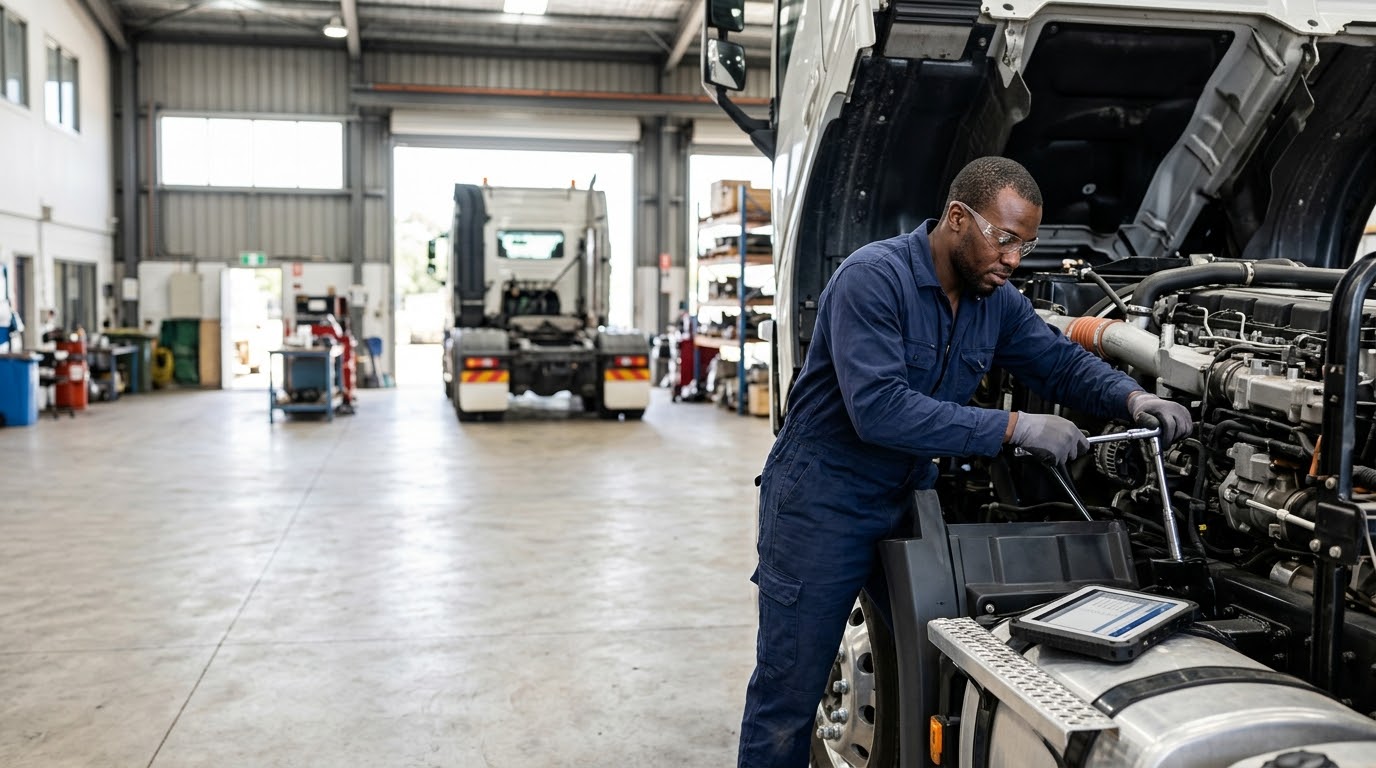
Diesel mechanics are employed across Australia’s road transport, heavy vehicle, construction, agriculture and mining industries. Their work keeps trucks, buses, earthmoving equipment and other diesel-powered machinery operating safely.
For qualified mechanics looking for work in Australia, opportunities can be found in vehicle workshops, transport companies, equipment dealerships, regional service centers and mining operations. However, employers do not all offer the same pay or conditions. Some positions require experience with heavy vehicles, while others focus on mobile plant or field servicing.
Overseas applicants should pay particular attention to qualification recognition, relevant work experience, and visa eligibility before applying.
How Much Do Diesel Mechanics Earn in Australia?
Diesel mechanic salaries depend on experience, location, the type of equipment being repaired, and the working arrangement.
Indeed Australia reported an average base pay of approximately AUD $46.79 per hour in its salary data updated in October 2026. That works out to about AUD $92,000 annually at 38 paid hours per week, before tax, if that hourly rate applies consistently. Actual earnings will vary.
Recent job advertisements also show the range of available pay:
- AUD $40–$48 per hour: examples of workshop and heavy diesel mechanic roles.
- AUD $45–$60 per hour: examples of experienced mechanics working on trucks and heavy equipment.
- AUD $100,000 or more annually: some specialist, regional and mining-related roles, depending on experience, rosters and allowances.
These are market examples, not guaranteed starting salaries. Mining and fly-in fly-out (FIFO) jobs may advertise higher rates but can involve longer shifts, demanding site conditions and extended periods away from home. Check whether an advertised salary includes superannuation, overtime or allowances.
Salary references: Indeed Australia – Diesel Mechanic salaries and SEEK – Diesel Mechanic salary information.
Types of Diesel Mechanic Jobs Available
Your experience and technical background can determine which positions are suitable.
- Heavy diesel mechanic: Maintains and repairs trucks, buses and other heavy road vehicles.
- Heavy plant mechanic: Works on excavators, loaders, haul trucks and other construction or mining equipment.
- Truck and trailer mechanic: Diagnoses faults and repairs engines, transmissions, brakes, and related systems.
- Agricultural diesel mechanic: Services tractors, harvesters and other farm machinery.
- Field service diesel mechanic: Travels to customer sites to diagnose and repair equipment.
- Workshop diesel mechanic: Carries out servicing, component replacement, engine repairs and scheduled maintenance in a workshop.
- FIFO diesel mechanic: Travels to remote mining or industrial sites under a rostered work arrangement.
Some employers also recruit diesel fitters or heavy vehicle mechanics. Read the job description carefully because these titles may require different trade backgrounds or equipment experience.
Qualifications Required for Diesel Mechanic Jobs
Australian employers commonly seek a relevant mechanical trade qualification and practical experience. The precise requirements depend on the position and employer.
1. Relevant trade qualification
A qualification in diesel mechanics, heavy vehicle mechanics or a closely related automotive trade can be important. Australia’s training system includes Certificate III pathways such as automotive diesel engine technology.
If you trained outside Australia, prepare your trade certificate, transcripts and employment evidence. An overseas qualification is not automatically treated as equivalent to an Australian qualification.
Official training information: Australian Government – training.gov.au.
2. Practical work experience
Employers may look for experience in areas such as:
- Diagnosing diesel engine faults.
- Servicing and repairing heavy vehicles or machinery.
- Working with fuel systems, transmissions, brakes and cooling systems.
- Using diagnostic equipment and technical manuals.
- Carrying out preventative maintenance and documenting repairs.
Some vacancies accept less experience than others, but specialist mining and field-service positions may expect a strong record of independent fault diagnosis.
3. Diagnostic and technical skills
Modern diesel mechanics need more than the ability to replace worn parts. Employers may expect you to use electronic diagnostic tools, interpret fault codes, understand hydraulic or electrical systems where relevant, and follow manufacturer repair procedures.
4. Safety and communication
You should be able to follow workshop safety procedures, use tools correctly, communicate faults clearly and maintain accurate service records. Remote sites may have additional safety inductions or site-specific requirements.
5. Driver’s license
A valid driver’s licence may be required, especially for field-service work, mobile repairs or jobs involving road testing. The class of license depends on the duties. A heavy vehicle driving license is not automatically required for every diesel mechanic position.
Can Foreign Applicants Apply for Diesel Mechanic Jobs in Australia?
Yes, overseas-trained mechanics can investigate Australian vacancies, but getting a job offer and getting permission to work in Australia are separate matters.
Diesel Motor Mechanic, occupation code 321212, appears on Australia’s official skilled occupation list for several visa pathways, including the Skills in Demand visa (subclass 482) Core Skills stream and the Employer Nomination Scheme visa (subclass 186) Direct Entry pathway. Eligibility depends on the applicable occupation list, visa criteria and individual circumstances.
An employer advertising a diesel mechanic vacancy is not necessarily willing or eligible to sponsor an overseas applicant. Before spending money on an application or migration service, check the current rules and confirm whether the employer considers candidates who need sponsorship.
Official sources:
- Australian Department of Home Affairs – Skilled occupation list
- Trades Recognition Australia
- Australian Department of Home Affairs – Skills in Demand visa (subclass 482)
Where Are Diesel Mechanic Jobs Found?
Vacancies appear in metropolitan areas as well as regional and remote parts of Australia. Current listings can be found in states including Western Australia, Queensland, New South Wales and Victoria.
The type of work differs by location. Mining and heavy plant positions may be more common in resource regions, while major cities and transport corridors offer workshop, fleet maintenance and dealership roles.
When comparing vacancies, consider the full package—not only the advertised hourly rate. Check the location, roster, overtime, accommodation, relocation assistance, and whether the employer will consider overseas applicants.
Where to Apply for Diesel Mechanic Jobs in Australia
Use these job websites to find current vacancies. Search for Diesel Mechanic, Heavy Diesel Mechanic, Diesel Motor Mechanic, Heavy Vehicle Mechanic and Field Service Technician to find a wider range of relevant positions.
1. Job websites
- SEEK Australia – Diesel Mechanic Jobs: Search workshop, transport, heavy vehicle and mining-related vacancies.
- Indeed Australia – Diesel Mechanic Jobs: Find advertised positions across different states and regions.
- Workforce Australia: Search vacancies using the Diesel Motor Mechanic occupation category.
- LinkedIn Jobs Australia: Search employer listings and connect with recruitment teams.
A vacancy appearing on a job board does not mean the employer offers visa sponsorship. Read each advertisement carefully and contact the employer if sponsorship is not mentioned.
2. Apply directly to employers
You can also check the careers pages of companies that operate heavy vehicles, equipment fleets, transport networks or mining machinery.
- BHP Careers — explore mining and maintenance opportunities.
- Rio Tinto Careers — search for equipment maintenance and mobile plant roles.
- Fortescue Careers — check mining equipment and maintenance vacancies.
- WesTrac Careers — explore heavy equipment service and technical roles.
- Komatsu Australia Careers — look for equipment maintenance and field-service positions.
These are employer career pages, not guarantees of current vacancies or sponsorship. Search for roles matching your qualifications and check the conditions of each advertisement.
How to Apply for Diesel Mechanic Jobs
Follow these steps when applying from Australia or overseas.
Step 1: Choose the right job title.
Match your experience to the vacancy. If you mainly repair trucks and buses, search for heavy vehicle or diesel mechanic roles. If you work on excavators, loaders and mining equipment, search for heavy plant or field-service positions.
Step 2: Prepare an Australian-style CV.
Keep your CV clear and focused on relevant trade experience. Include:
- Your name and professional contact details.
- Trade qualifications and technical training.
- Employers, job titles and dates of employment.
- Types of diesel engines, vehicles and machinery you have repaired.
- Diagnostic equipment and systems you can use.
- Examples of fault diagnosis, preventive maintenance and major repairs.
- Referees, if available and appropriate.
Use specific examples of your work instead of simply writing that you are hardworking or experienced.
Step 3: Gather supporting documents.
Prepare copies of your:
- Trade certificate or diploma.
- Academic or technical transcripts, where applicable.
- Employment reference letters describing your duties and dates of service.
- Training certificates and relevant safety credentials.
- Passport, when needed for a legitimate recruitment or visa process.
- Skills assessment documents, if required for your chosen pathway.
You may not need every document at the first application stage. Follow the employer’s instructions and submit sensitive identity documents only through legitimate, secure channels.
Step 4: Submit your application.
Apply through the employer’s official careers website or the job platform hosting the advertisement. Tailor your CV to the job description and include a short cover letter explaining your relevant experience.
Step 5: Prepare for the interview or trade assessment.
Employers may ask how you diagnose engine faults, inspect components, use diagnostic tools, carry out repairs and follow safety procedures. Be ready to explain real jobs you have completed and the methods you used to identify and fix faults.
Step 6: Confirm the employment and visa conditions.
Before accepting an overseas offer, verify the employer, job location, salary, working hours, accommodation arrangements if applicable, and whether sponsorship is genuinely available.
Visa Sponsorship for Overseas Diesel Mechanics
Diesel Motor Mechanic is listed under occupation code 321212 on the Australian Department of Home Affairs skilled occupation list. The list identifies relevant visa pathways, including the Skills in Demand visa (subclass 482) Core Skills stream and the Employer Nomination Scheme visa (subclass 186) Direct Entry pathway.
However, being listed does not automatically make an applicant eligible. The applicable visa may require an eligible nomination, relevant skills and experience, English-language evidence, a skills assessment or other criteria.
Check these official sources before paying for an assessment or migration advice:
- Department of Home Affairs – Skilled occupation list
- Department of Home Affairs – Skills in Demand visa (subclass 482)
- Trades Recognition Australia
Trades Recognition Australia administers several trade skills assessment programs. The correct program depends on your circumstances and intended migration pathway, so check the current eligibility rules rather than assuming every overseas mechanic needs the same assessment.
How to Avoid Diesel Mechanic Recruitment Scams
Be cautious if someone promises guaranteed Australian employment, permanent residence, or a visa in exchange for a large upfront payment.
- Verify the vacancy on the employer’s official website.
- Check that the person contacting you genuinely represents the employer.
- Do not rely on a social media post as proof that a job or sponsorship offer is genuine.
- Never submit false qualifications or experience records.
- Confirm visa requirements through the Department of Home Affairs.
- Seek advice from a registered migration agent or an Australian legal practitioner where appropriate.
A genuine job offer does not remove the need to meet Australian immigration requirements.
Skills Australian Employers Look for in Diesel Mechanics
Employers want mechanics who can diagnose faults accurately, repair equipment safely and reduce unnecessary downtime. These skills can strengthen your application:
- Diesel engine diagnostics: Identifying engine faults, interpreting fault codes and finding the underlying cause of a problem.
- Heavy vehicle maintenance: Servicing trucks, buses, trailers and related components.
- Hydraulic and electrical systems: Troubleshooting systems commonly found in heavy equipment and machinery.
- Preventive maintenance: Inspecting equipment, replacing worn components and identifying problems before they cause breakdowns.
- Technical documentation: Reading workshop manuals, following repair procedures, and recording completed work.
- Workplace safety: Using tools correctly, following isolation procedures and complying with site safety rules.
- Independent problem-solving: Diagnosing difficult faults and explaining repairs to supervisors or customers.
For mining and field-service roles, experience with large mobile equipment, remote breakdowns or manufacturer-specific diagnostic systems may be particularly valuable.
Tips for Getting Hired as a Diesel Mechanic in Australia
Target jobs that match your experience. Do not apply only for mining positions because they advertise high salaries. Transport fleets, equipment dealerships, agricultural businesses and independent workshops may also need diesel mechanics.
Show what you can actually repair. Instead of writing “experienced diesel mechanic,” specify the equipment you have worked on, the faults you diagnose and the maintenance tasks you perform.
Be clear about your overseas status. If you need employer sponsorship, state this professionally and confirm whether the employer considers applicants who require sponsorship. Do not assume every advertised vacancy is open to overseas candidates.
Prepare strong employment references. References should confirm your job title, employment dates, and duties. Detailed evidence of relevant work experience can help employers assess your trade background.
Check regional opportunities. Consider regional workshops, transport depots and equipment service centers if you are flexible about location. However, a regional job does not automatically qualify you for a particular visa or guarantee sponsorship.
Compare the complete employment package. Look beyond the advertised hourly rate. Ask about ordinary hours, overtime, rosters, superannuation, accommodation, travel arrangements and whether the stated salary includes allowances.
Frequently Asked Questions
Can I apply for diesel mechanic jobs in Australia from Nigeria?
Yes. You can apply for vacancies that accept overseas applicants. Your chances depend on your qualifications, experience, the employer’s recruitment policy and whether you can meet the relevant Australian work visa requirements.
Do Australian employers sponsor diesel mechanics?
Some employers may sponsor eligible mechanics, particularly where they need specific trade skills. Sponsorship is not guaranteed, even when a position is advertised as a diesel mechanic job. Confirm sponsorship availability directly with the employer and check the applicable visa criteria.
How much does a diesel mechanic earn in Australia?
Pay varies by experience, employer, location and equipment type. Salary websites and job advertisements provide useful estimates, but confirm the current rate and whether overtime, superannuation and allowances are included before accepting an offer.
Do I need an Australian trade certificate?
Not necessarily for every job. Employers may consider relevant overseas qualifications and experience, but some positions, assessments or migration pathways have specific requirements. Check the employer’s conditions and the official skills assessment rules for your circumstances.
Are FIFO diesel mechanic jobs available?
Mining and other remote operations recruit mechanics for rostered and field-service work when positions are available. These jobs may require heavy equipment experience, medical checks, site inductions and additional safety training. Read the roster and employment conditions carefully.
Can I get a diesel mechanic job without experience?
It can be more difficult to secure a qualified diesel mechanic position without practical experience. Apprenticeships and entry-level workshop roles may be options for people who are eligible to train and work in Australia. Overseas applicants should not assume an entry-level position will offer sponsorship.
Conclusion
Diesel mechanic jobs in Australia can offer opportunities across transport, construction, agriculture, equipment servicing and mining. The strongest applications demonstrate relevant trade qualifications, practical diagnostic skills and experience with the equipment named in the vacancy.
If you are applying from overseas, start with legitimate employer websites, prepare clear evidence of your work history and verify visa requirements before making financial commitments. A realistic application strategy is more useful than relying on promises of guaranteed employment or sponsorship.
Disclaimer
This article is for informational purposes only. Salaries, vacancies, skills assessment rules, and visa requirements can change. Verify details with official Australian authorities and employers before applying.