
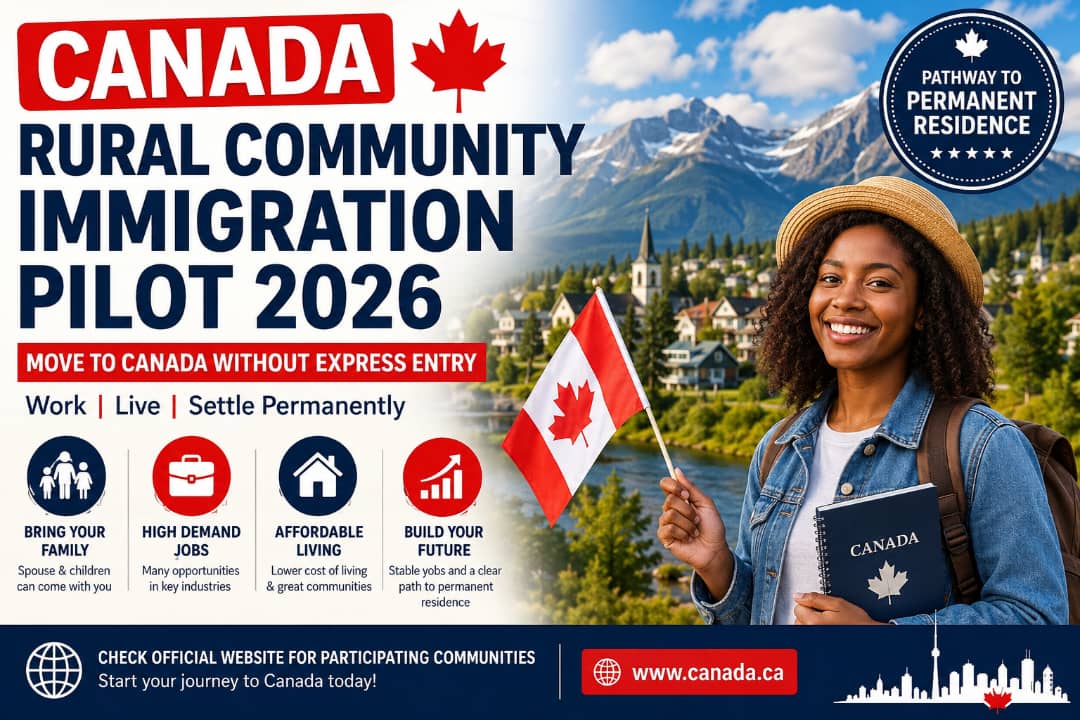
Canada remains one of the most attractive destinations for skilled workers seeking a better quality of life, stable employment, and a clear pathway to permanent residence. While many people are familiar with the Express Entry system, not everyone knows that Canada also offers alternative immigration pathways designed to address labour shortages in smaller communities. One of the most promising options in 2026 is the Canada Rural Community Immigration Pilot (RCIP).
If you have dreamed of living and working in Canada but have been discouraged by the high Comprehensive Ranking System (CRS) scores often required under Express Entry, this pilot programme could be the opportunity you have been waiting for. The RCIP is designed to connect employers in participating rural communities with qualified foreign workers who are ready to contribute to the local economy and settle permanently in Canada.
What Is the Canada Rural Community Immigration Pilot?
The Canada Rural Community Immigration Pilot is a community-driven immigration programme that helps smaller Canadian towns attract skilled workers to fill jobs that local employers are struggling to fill. Instead of competing against thousands of candidates through Express Entry, eligible applicants receive support directly from participating communities and employers.
The goal of the programme is simple: strengthen rural economies while giving newcomers a realistic opportunity to build a successful future in Canada. Successful applicants can eventually apply for permanent residence, making this programme attractive for individuals and families looking for long-term stability.
Unlike many temporary work programmes, the RCIP encourages newcomers to become active members of their chosen community by living, working, and contributing to local development.
Why Is the RCIP Becoming More Popular in 2026?
Canada continues to face labour shortages across several industries, especially outside its largest cities. Employers in healthcare, construction, manufacturing, agriculture, hospitality, transportation, and skilled trades are actively searching for qualified workers from around the world.
For many international applicants, the Rural Community Immigration Pilot offers several advantages:
A possible pathway to permanent residence.
Lower competition than many federal immigration programmes.
Opportunities in communities with lower living costs.
Strong employer support during the immigration process.
Access to stable, full-time employment.
A welcoming environment for newcomers and their families.
These benefits have made the RCIP one of the most searched Canadian immigration pathways for people planning to relocate in 2026.
Who Can Apply for the Canada Rural Community Immigration Pilot?
Although each participating community may have specific local requirements, applicants generally need to meet several important conditions.
You will usually need:
A genuine job offer from an approved employer in a participating rural community.
Relevant work experience or qualifying education.
Language proficiency that meets the programme requirements.
Enough settlement funds if required.
The intention to live in the community that recommends you.
Proof that you meet Canadian immigration and admissibility requirements.
Meeting these basic requirements is only the first step. Your chosen community will also assess whether you are likely to settle successfully and contribute to the local economy.
What Types of Jobs Are Available?
One of the biggest advantages of this immigration pathway is the variety of occupations available. Depending on the community and employer needs, vacancies may include:
Healthcare professionals and caregivers.
Truck drivers and transport workers.
Welders, electricians, plumbers, and other skilled trades.
Agricultural and farm workers.
Manufacturing and factory employees.
Hospitality workers, including chefs and hotel staff.
Administrative assistants and office support staff.
Early childhood educators and community support workers.
Many of these occupations continue to experience worker shortages, increasing the chances for qualified international applicants.
Participating Communities Under the Canada Rural Community Immigration Pilot
One of the unique features of the Canada Rural Community Immigration Pilot (RCIP) is that it focuses on smaller towns and communities rather than Canada’s largest cities. These communities work closely with local employers to identify labour shortages and recommend qualified foreign workers for permanent residence.
While the list of participating communities may change over time, applicants should always check the latest list before applying. Communities selected under the programme are generally looking for workers who are committed to living and building a future there, not just using the programme as a way to move elsewhere in Canada.
Many rural communities offer advantages such as:
Affordable housing compared to major cities.
Shorter commuting times.
Friendly and welcoming neighbourhoods.
Strong community support for newcomers.
Good schools and healthcare facilities.
Better work-life balance.
For many families, these benefits make rural Canada an excellent place to settle permanently.
How Much Can You Earn?
Salaries under the RCIP vary depending on your occupation, experience, province, and employer. However, many jobs offer competitive wages that allow workers to enjoy a comfortable lifestyle.
Here are some estimated annual salary ranges:
Occupation Estimated Annual Salary
Registered Nurse CAD 70,000–100,000+
Truck Driver CAD 55,000–85,000
Welder CAD 55,000–80,000
Electrician CAD 65,000–95,000
Caregiver CAD 40,000–65,000
Farm Worker CAD 38,000–55,000
Hotel Worker CAD 38,000–55,000
Manufacturing Worker CAD 45,000–70,000
Keep in mind that wages differ by employer and location. Some employers may also provide additional benefits such as health insurance, paid holidays, retirement contributions, relocation assistance, or training opportunities.
Documents You May Need
Preparing your documents in advance can make the application process smoother. Although requirements may vary depending on your circumstances, applicants are commonly asked to provide:
A valid passport.
A genuine job offer from a participating employer.
Educational certificates or diplomas.
Proof of relevant work experience.
Language test results from an approved testing organisation.
Police clearance certificates (where required).
Medical examination results.
Proof of settlement funds if applicable.
Any additional documents requested by the participating community or Canadian immigration authorities.
Submitting complete and accurate documents helps avoid unnecessary delays.
How to Find Eligible Employers
A qualifying job offer is one of the most important requirements for the RCIP. This means you should focus your job search on employers participating in approved rural communities.
When searching for jobs:
Look for vacancies in participating RCIP communities.
Tailor your CV and cover letter to Canadian standards.
Highlight relevant skills and work experience.
Apply only for positions that genuinely match your qualifications.
Be cautious of anyone requesting payment in exchange for a job offer, as legitimate employers do not sell jobs.
Taking the time to prepare a strong application can improve your chances of securing employment.
Why Employers Hire International Workers
Many rural employers simply cannot find enough qualified local workers. Hiring skilled international employees helps businesses continue operating while supporting the growth of their communities.
This creates a win-win situation. Employers fill critical vacancies, and foreign workers gain an opportunity to build a career and potentially become permanent residents of Canada.
As Canada continues addressing labour shortages in 2026, the Rural Community Immigration Pilot is expected to remain one of the country’s most attractive immigration pathways for skilled workers seeking long-term opportunities.
How to Apply for the Canada Rural Community Immigration Pilot in 2026
Once you have confirmed that you meet the eligibility requirements and secured a qualifying job offer, you can begin your application. Although the exact process may vary slightly depending on the community, the following steps are generally involved.
Step 1: Check Your Eligibility
Review the eligibility requirements published by the participating community and ensure you meet the criteria for work experience, education, language proficiency, and settlement plans.
Step 2: Find a Qualifying Job Offer
Apply for jobs with employers approved under the Rural Community Immigration Pilot. Your job offer must meet the programme requirements before you can move forward.
Step 3: Receive a Community Recommendation
If the employer hires you and the community believes you are a good fit, you may receive a community recommendation. This is an important part of the application process.
Step 4: Apply for Permanent Residence
After receiving the community recommendation, submit your permanent residence application to the Canadian immigration authorities along with all required documents.
Step 5: Wait for Processing
Immigration officials will review your application, verify your documents, and may request additional information if necessary. If approved, you will receive instructions on your next steps before relocating to Canada.
Common Mistakes to Avoid
Many applicants delay or lose their chances because of avoidable mistakes. Here are some of the most common ones:
Applying without meeting the programme requirements.
Submitting incomplete or inaccurate documents.
Providing false information during the application process.
Ignoring language test requirements.
Accepting fake job offers from scammers.
Failing to research the participating community before applying.
Being honest, organised, and well-prepared can significantly improve your chances of success.
Where to Apply
Applications for the Canada Rural Community Immigration Pilot (RCIP) are submitted through the official Immigration, Refugees and Citizenship Canada (IRCC) website. Before applying, you should first check your eligibility, find a job offer from a designated employer in one of the participating communities, and obtain a community recommendation.
Canada +1
Use the following official resources:
Official RCIP programme page: Canada Rural Community Immigration Pilot (IRCC).
Find out if you are eligible: RCIP Eligibility Requirements.
Find designated employers and participating communities: RCIP Job Offers and Participating Communities.
Important: Never pay anyone who claims they can guarantee you a Canadian visa or sell you a job offer. The Government of Canada does not authorise agents to guarantee immigration approval. Always apply using the official IRCC website.
Frequently Asked Questions (FAQs)
1. Is the Canada Rural Community Immigration Pilot open to applicants outside Canada?
Yes. Eligible applicants from many countries can apply, provided they meet the programme requirements.
2. Do I need an Express Entry profile?
No. One of the major advantages of this programme is that it provides an alternative pathway outside the traditional Express Entry system.
3. Can my family come with me?
In many cases, eligible spouses or partners and dependent children may be included in your permanent residence application, subject to Canadian immigration rules.
4. Do I need a job offer?
Yes. A qualifying job offer from an approved employer in a participating community is one of the key requirements.
5. Can this programme lead to permanent residence?
Yes. The RCIP is designed to provide eligible applicants with a pathway to permanent residence if they meet all programme requirements.
Conclusion
The Canada Rural Community Immigration Pilot 2026 is an excellent option for skilled workers who want to build a new life in Canada without relying solely on Express Entry. With growing labour shortages across rural communities, many employers are actively looking for qualified international workers to fill essential roles.
If you have the right skills, relevant experience, and a genuine interest in living in a smaller Canadian community, this programme could open the door to long-term employment and permanent residence. Start preparing your documents, improve your language test scores if necessary, and keep an eye on official announcements for participating communities and job opportunities.
Disclaimer
This article is for informational purposes only and does not constitute immigration or legal advice. Immigration policies, eligibility requirements, participating communities, and application procedures may change. Always verify the latest information through the official Government of Canada immigration website before applying.