
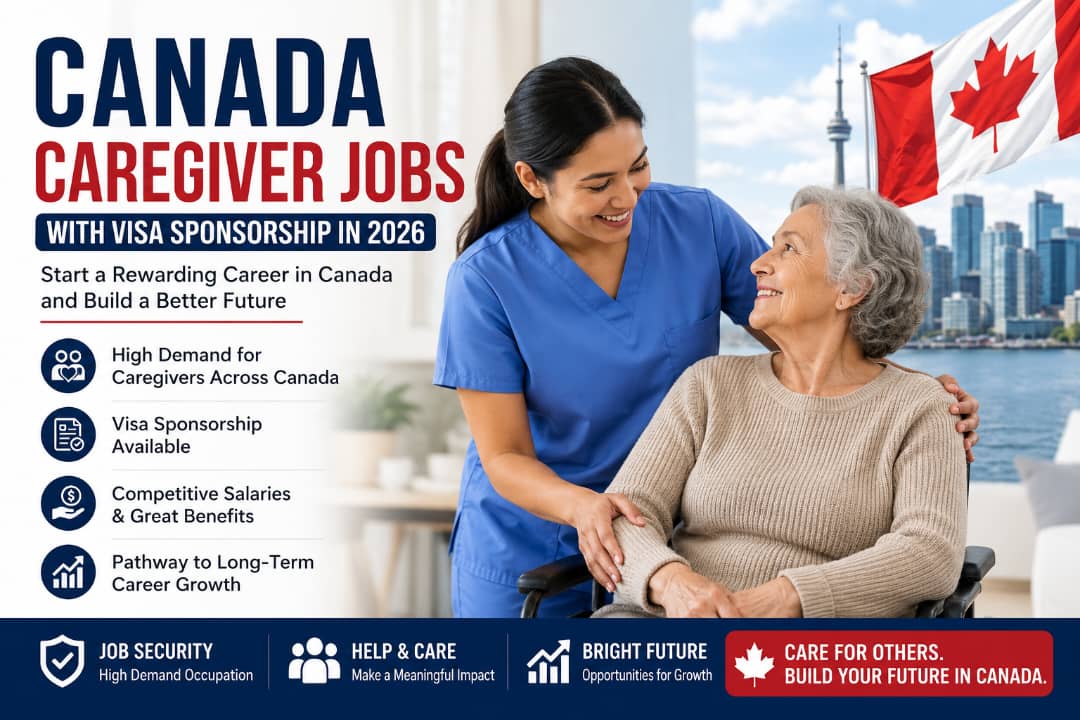
Canada continues to be one of the top destinations for international workers seeking stable employment, competitive salaries, and a high quality of life. As the country’s population ages and the demand for healthcare and home support services grows, caregiver jobs remain among the most in-demand occupations for foreign workers in 2026.
For many people from Nigeria, Ghana, Kenya, India, the Philippines, and other countries, caregiver jobs offer an excellent opportunity to build a rewarding career while living and working legally in Canada. Many employers are willing to sponsor qualified foreign workers when they cannot fill these positions locally, making caregiver roles an attractive pathway for those looking to start a new life abroad.
If you are compassionate, patient, and enjoy helping others, a caregiver career could be the opportunity you’ve been looking for.
In this comprehensive guide, you’ll learn everything you need to know about Canada caregiver jobs with visa sponsorship in 2026, including eligibility requirements, expected salaries, job responsibilities, application steps, and practical tips to improve your chances of getting hired.
What Are Caregiver Jobs?
Caregivers provide essential support to individuals who need assistance with their daily lives. Depending on the role, caregivers may work with:
– Seniors and elderly people
– Individuals living with disabilities
– People recovering from illness or surgery
– Children requiring supervision and care
– Individuals with special medical or personal care needs
Some caregivers work in private homes, while others are employed in nursing homes, assisted living facilities, hospitals, rehabilitation centres, or community care organizations.
Their work helps improve the quality of life of those who need extra support while allowing families to have peace of mind knowing their loved ones are receiving proper care.
Why Canada Needs International Caregivers in 2026
Canada continues to experience a growing demand for qualified caregivers due to several important factors.
An Aging Population
Canada’s senior population is increasing every year, creating a greater need for personal care workers, home support workers, and healthcare assistants.
Labour Shortages
Many provinces continue to face shortages of qualified caregivers, particularly in rural and remote communities. Employers often recruit internationally to help meet these staffing needs.
Increased Demand for Home Care
Many elderly Canadians prefer receiving care in their own homes rather than moving into long-term care facilities. This trend has increased the demand for home support workers and live-in or live-out caregivers.
Expansion of Healthcare Services
Governments and healthcare providers continue to invest in community-based care services, creating additional employment opportunities for trained caregivers.
Types of Caregiver Jobs Available
Caregiving covers a wide range of roles. Some of the most common positions include:
Home Support Worker
Home support workers assist clients with daily living activities such as:
– Personal hygiene
– Bathing and dressing
– Meal preparation
– Light housekeeping
– Medication reminders
– Grocery shopping
– Companionship
These workers often provide care in private residences.
Personal Support Worker (PSW)
Personal Support Workers assist elderly individuals and people living with disabilities in both home care and healthcare facilities.
Typical duties include:
– Helping with mobility
– Monitoring health conditions
– Assisting with feeding
– Providing emotional support
– Maintaining patient comfort
Child Caregiver
Child caregivers supervise and care for children while parents are working or unavailable.
Responsibilities may include:
– Preparing meals
– Helping with homework
– Organizing educational activities
– School drop-offs and pick-ups
– Maintaining a safe environment
Live-In Caregiver
Some employers provide accommodation as part of the employment package.
Live-in caregivers often:
– Reside in the employer’s home
– Assist with daily personal care
– Prepare meals
– Provide companionship
– Help with household tasks
Accommodation arrangements vary depending on the employer and provincial employment standards.
Benefits of Working as a Caregiver in Canada
Caregiver jobs provide much more than a monthly salary. Many workers enjoy long-term career opportunities and valuable international experience.
Some of the key benefits include:
Competitive Salaries
Caregivers earn competitive wages, with opportunities for overtime, weekend pay, and holiday pay depending on the employer and province.
High Demand Across Canada
Qualified caregivers are needed in provinces such as:
– Ontario
– British Columbia
– Alberta
– Manitoba
– Saskatchewan
– Nova Scotia
– New Brunswick
Because demand remains strong, experienced caregivers often have access to multiple employment opportunities.
Valuable Canadian Work Experience
Working in Canada allows caregivers to gain recognised international experience that can strengthen future career prospects.
Opportunities for Career Growth
Many caregivers continue their education and progress into careers such as:
– Licensed Practical Nurse (LPN)
– Registered Nurse (RN)
– Healthcare Supervisor
– Community Health Worker
– Healthcare Administrator
Potential Immigration Opportunities
Depending on the immigration program and your personal circumstances, qualifying Canadian work experience may support future applications for permanent residence through available immigration pathways.
Essential Skills Employers Look For
Employers value caregivers who possess both technical knowledge and strong interpersonal skills.
Important qualities include:
– Compassion and empathy
– Patience
– Good communication skills
– Reliability and honesty
– Physical fitness
– Time management
– Ability to work independently
– Problem-solving skills
– Respect for privacy and confidentiality
Having previous caregiving experience or healthcare training can make your application more competitive.
Is Previous Experience Required?
Not every caregiver position requires years of experience.
Some entry-level employers may provide on-the-job training, especially for home support roles. However, candidates with previous experience in caregiving, nursing assistance, home care, or healthcare generally have a stronger chance of receiving job offers.
First aid certification, CPR training, or healthcare-related qualifications can also improve your employability.
Eligibility Requirements for Canada Caregiver Jobs
If you’re planning to work as a caregiver in Canada, it’s important to understand that each employer may have specific hiring requirements. However, there are general qualifications that most employers and immigration programs expect international applicants to meet.
Meeting these requirements can significantly improve your chances of receiving a job offer with visa sponsorship.
1. Valid International Passport
A valid passport is one of the first requirements when applying for jobs abroad. Ensure your passport has enough validity to cover your application process and intended stay in Canada.
2. Educational Qualifications
Most caregiver positions require at least a secondary school (high school) certificate. However, employers often prefer candidates who have additional qualifications in healthcare or caregiving.
Relevant qualifications include:
– Caregiver Certificate
– Health Care Assistant Certificate
– Nursing Assistant Certificate
– Community Health Extension qualifications
– Diploma or Degree in Nursing
– First Aid and CPR Certification
Having recognized healthcare training can make your application stand out from other candidates.
Work Experience
While some employers hire entry-level caregivers, many prefer applicants with at least one year of relevant experience.
Experience in any of the following areas is highly valued:
– Elderly care
– Childcare
– Disability support
– Home care services
– Hospital assistance
– Nursing homes
– Rehabilitation centres
If you have worked as a caregiver for a private family, hospital, clinic, or care home, be sure to include that experience in your CV.
English or French Language Skills
Caregivers communicate daily with clients, family members, doctors, nurses, and other healthcare professionals.
Good communication skills are essential.
Depending on the immigration pathway, applicants may also need to demonstrate language ability through an approved English or French language test.
Improving your communication skills before applying can increase your employment opportunities.
Medical Examination
Foreign workers are generally required to complete a medical examination conducted by an approved panel physician before receiving work authorization.
This ensures applicants meet Canada’s health requirements.
Police Clearance Certificate
Most employers and immigration authorities require evidence of good character.
Applicants are commonly asked to provide a police clearance certificate from their country of residence or any country where they have lived for an extended period.
Average Caregiver Salaries in Canada (2026)
Salaries vary depending on the province, employer, qualifications, work experience, and type of caregiving role.
Below are estimated annual salary ranges.
Position| Estimated Annual Salary (CAD)
Home Support Worker| CAD $38,000–$52,000
Personal Support Worker| CAD $42,000–$60,000
Child Caregiver| CAD $38,000–$55,000
Live-In Caregiver| CAD $40,000–$58,000
Senior Care Assistant| CAD $45,000–$65,000
Healthcare Aide| CAD $45,000–$62,000
Many employers also offer:
– Overtime pay
– Night shift allowances
– Weekend premiums
– Paid annual leave
– Paid public holidays
Provinces with High Demand for Caregivers
Caregiver opportunities exist across Canada, but some provinces consistently recruit larger numbers of international workers.
Ontario
Ontario has one of Canada’s largest healthcare systems and continues to recruit caregivers for hospitals, long-term care facilities, and private homes.
British Columbia
The province has an aging population and an increasing demand for home support workers and healthcare assistants.
Alberta
Healthcare expansion and population growth continue to create employment opportunities for qualified caregivers.
Manitoba
Many employers actively recruit international workers to fill caregiver shortages in both urban and rural communities.
Saskatchewan
Healthcare facilities and home care providers regularly seek experienced caregivers.
Nova Scotia and New Brunswick
Atlantic Canada’s growing senior population has increased the need for home support workers and personal care assistants.
Benefits of Visa Sponsorship
Securing a caregiver job with visa sponsorship offers several advantages.
These may include:
– Legal authorization to work in Canada
– Competitive salary and employment benefits
– Opportunities for long-term employment
– Valuable Canadian work experience
– Employer support during recruitment
– Potential pathways to permanent residence, depending on the immigration program and your eligibility
Some employers may also assist with relocation or temporary accommodation, although this varies and should always be confirmed before accepting a job offer.
Documents You Should Prepare
Before applying, organize your documents carefully.
Most employers request:
– Valid passport
– Updated CV or résumé
– Educational certificates
– Caregiver or healthcare training certificates
– Employment reference letters
– Police clearance certificate
– Medical examination results (when requested)
– Passport-sized photographs
– First Aid and CPR certificates (if available)
– Language test results (if required)
Having these documents ready allows you to respond quickly when employers request additional information.
Tips to Make Your Application Stronger
Competition for caregiver jobs can be high, but there are practical ways to improve your chances of success.
– Tailor your CV to each job you apply for.
– Highlight your caregiving experience and achievements.
– Include any healthcare certifications you have earned.
– Obtain First Aid and CPR training if possible.
– Ask former employers for strong reference letters.
– Be honest about your skills and experience.
– Apply consistently to multiple employers instead of waiting for one response.
A well-prepared application demonstrates professionalism and can make a positive impression on potential employers.
How to Apply for Canada Caregiver Jobs with Visa Sponsorship
Once you have the required qualifications and documents, the next step is finding a genuine employer willing to hire international caregivers. Applying strategically can greatly improve your chances of receiving a job offer.
Step 1: Prepare a Canadian-Style CV
Your CV is one of the most important documents in your application. Canadian employers prefer a clear, professional résumé that focuses on your skills and work experience.
Your CV should include:
– Full name and contact details
– Professional summary
– Work experience
– Educational qualifications
– Caregiving or healthcare certifications
– Relevant skills
– Languages spoken
– Professional references (if available)
Avoid including unnecessary personal details such as marital status, religion, or passport number unless specifically requested.
Step 2: Write a Strong Cover Letter
A cover letter allows you to explain why you are interested in the position and why you would be a valuable employee.
Keep it concise and professional. Mention:
– Your caregiving experience
– Your passion for helping others
– Relevant qualifications and certifications
– Your willingness to relocate to Canada
– Your interest in employer-sponsored opportunities
A personalized cover letter often makes a stronger impression than a generic one.
Step 3: Search for Genuine Job Opportunities
Use reputable job websites and licensed recruitment agencies when searching for caregiver positions.
Some trusted sources include:
– The Government of Canada’s Job Bank
– Indeed Canada
– LinkedIn Jobs
– Workopolis
– Glassdoor
– Provincial healthcare recruitment websites
– Reputable home care agencies and long-term care providers
Read each job advertisement carefully to confirm the requirements and whether international applicants are eligible to apply.
Step 4: Submit Your Application
Apply only for positions that match your qualifications and experience.
Before submitting:
– Double-check your CV for errors.
– Ensure your cover letter is tailored to the employer.
– Attach all requested documents.
– Follow the application instructions carefully.
Attention to detail demonstrates professionalism and reliability.
Step 5: Attend the Interview
If shortlisted, you may be invited to an online interview.
Employers commonly ask questions about:
– Your caregiving experience
– How you handle emergencies
– Communication with clients and families
– Time management
– Working independently
– Your motivation for moving to Canada
Answer honestly and use examples from your previous work where possible.
Step 6: Receive a Job Offer and Begin the Visa Process
Successful applicants receive a formal employment offer outlining:
– Salary
– Working hours
– Job responsibilities
– Employment conditions
– Benefits
After accepting the offer, you can begin the process of applying for the appropriate Canadian work authorization using the documents requested by the relevant authorities.
Common Mistakes to Avoid
Many applicants lose opportunities because of simple mistakes.
Applying for Jobs You Don’t Qualify For
Focus on positions that match your education, skills, and experience.
Using a Generic CV
Tailor your CV for each application to show how your experience matches the job requirements.
Ignoring Employer Instructions
Always follow the application instructions carefully. Missing documents or incomplete applications can lead to rejection.
Providing False Information
Never exaggerate your qualifications or work experience. Employers routinely verify information provided during the hiring process.
Falling for Recruitment Scams
Be cautious of anyone promising guaranteed jobs or asking for large upfront payments for visa sponsorship.
Legitimate employers conduct proper recruitment processes and provide written employment contracts.
Tips to Increase Your Chances of Getting Hired
Competition for caregiver positions can be strong, but these practical tips can help you stand out.
– Obtain First Aid and CPR certification.
– Gain practical caregiving experience before applying.
– Improve your English or French communication skills.
– Request strong reference letters from previous employers.
– Keep your CV updated.
– Apply consistently to multiple employers.
– Stay informed about current caregiver shortages across Canadian provinces.
Patience, persistence, and preparation often make the difference between a rejected application and a successful job offer.
Frequently Asked Questions (FAQs)
Can foreigners apply for caregiver jobs in Canada in 2026?
Yes. Many Canadian employers continue to recruit qualified foreign caregivers when they cannot fill available positions locally.
Do I need previous caregiving experience?
Not every position requires extensive experience, but relevant work experience and healthcare training generally improve your chances of getting hired.
Is IELTS required?
Language requirements depend on the immigration pathway and employer. Some applicants may need to provide approved English or French language test results.
Can caregiver jobs lead to permanent residence?
Some workers may become eligible for permanent residence through available Canadian immigration pathways if they meet the applicable requirements at the time they apply.
Can my family join me in Canada?
Depending on your work authorization and personal circumstances, eligible family members may be able to apply to accompany you or join you later under applicable Canadian immigration programs.
Conclusion
Canada remains one of the best destinations for international caregivers seeking rewarding careers, competitive salaries, and opportunities for professional growth. With an increasing demand for home support workers, personal support workers, and caregivers, qualified applicants continue to find employment opportunities across several provinces.
The key to success is preparing a strong application, obtaining relevant certifications, applying through reputable employers, and staying informed about current immigration and employment requirements.
If you are committed to building a career in caregiving, 2026 could be an excellent time to explore opportunities in Canada. Start preparing your documents, strengthen your skills, and apply through trusted recruitment channels to maximize your chances of securing a visa-sponsored caregiver position.
Disclaimer: Immigration programs, work authorization requirements, and labour market needs may change over time. Always verify the latest information through official Government of Canada resources and ensure you apply only through legitimate employers or licensed recruiters.