
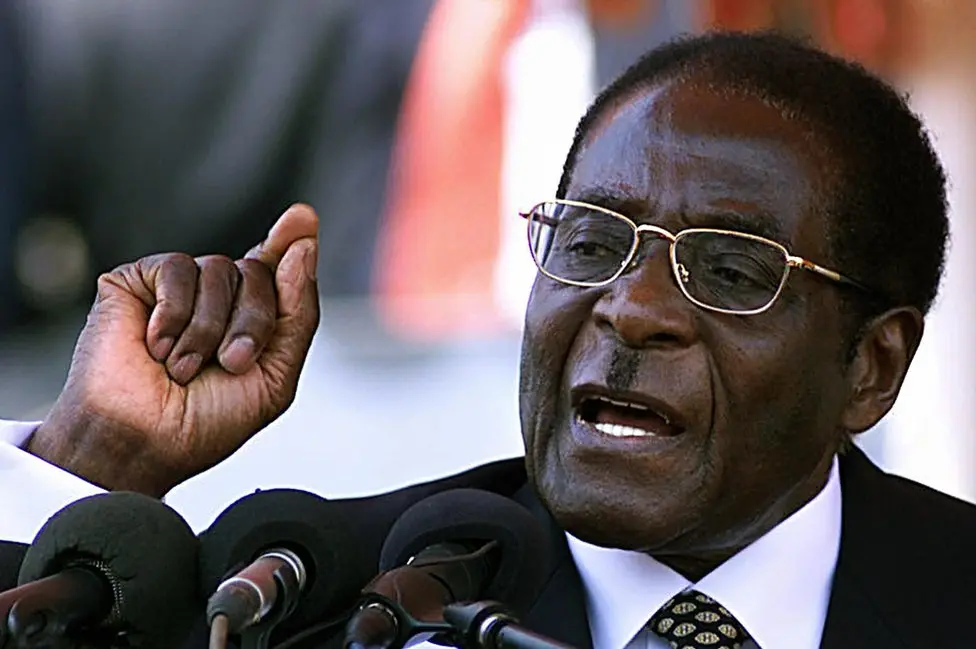
Robert Mugabe was born on February 21, 1924, in Kutama, a small mission settlement in what was then Southern Rhodesia, now known as Zimbabwe.
His early life was shaped by both discipline and absence, as his father left the family when he was still young, leaving his mother to raise him under strict Catholic values.
Growing up in a colonial environment meant Mugabe witnessed inequality from a very young age. White minority rule dominated the political and economic structures, and Africans had limited access to opportunities.
He was known to be quiet, highly intelligent, and deeply introspective. Unlike many future political leaders who showed early charisma, Mugabe’s strength came from discipline and academic excellence.
Educational Background Of Robert Mugabe
Mugabe’s education is one of the most remarkable aspects of his biography. He attended Kutama College and later trained as a teacher at St Francis Xavier College. His academic journey did not stop there.
Over the years, he earned multiple degrees through distance learning and university studies, including qualifications from institutions in South Africa and the United Kingdom. His areas of study included:
- Education
- Economics
- Law
- Political science
This means he was not just a political figure but an intellectual deeply grounded in theory. His exposure to different educational systems, especially during his time in Ghana, exposed him to African nationalism and socialist ideas.
While teaching in Ghana in the 1950s, Mugabe came under the influence of Kwame Nkrumah, whose leadership inspired him to believe that African countries could break free from colonial rule.
This period transformed Mugabe from a teacher into a political thinker ready to challenge colonial authority.
Career And Political Journey
Mugabe’s political career began in earnest when he returned to Southern Rhodesia in 1960. He joined nationalist movements fighting against white minority rule and quickly rose through the ranks due to his education and discipline.
He became a key figure in the Zimbabwe African National Union, often referred to as ZANU. His leadership within the party grew stronger after internal splits within the nationalist movement.
In 1964, Mugabe was arrested by the colonial government and spent over a decade in prison. Instead of weakening him, imprisonment strengthened his resolve. During this time, he continued studying and organizing resistance efforts.
After his release in 1974, Mugabe fled to Mozambique, where he led armed resistance against the Rhodesian government. This period marked the beginning of his rise to international recognition.
The liberation war intensified, and Mugabe positioned himself as one of the central leaders fighting for independence.
Rise To Fame And Political Power
The turning point in Robert Mugabe’s life came with the end of white minority rule. In 1980, Zimbabwe gained independence after negotiations that led to democratic elections.
Mugabe emerged victorious and became the first Prime Minister of independent Zimbabwe. His early years in power were widely praised both locally and internationally.
He focused on:
- Expanding education access
- Improving healthcare systems
- Promoting reconciliation between black and white citizens
At this stage, Mugabe was seen as a visionary leader. Zimbabwe’s economy was relatively stable, and the country was considered one of the most promising in Africa.
In 1987, Mugabe became President after constitutional changes, consolidating his power. This marked a shift from collective leadership to a more centralized authority structure.
Relationships And Family Life
Robert Mugabe’s personal life often reflected both stability and controversy.
He was first married to Sally Hayfron, a Ghanaian woman he met during his time in Ghana. Sally was widely respected and played a supportive role throughout his early political career. Her death in 1992 marked a significant emotional turning point for Mugabe.
Later, he married Grace Mugabe, a former secretary who became one of the most influential figures in his later years. Their relationship attracted public attention due to its timing and Grace’s increasing involvement in politics.
Mugabe had several children, and his family life became more visible as his presidency progressed, especially during his later years when Grace Mugabe was seen as a potential political successor.
The Peak Of Power And Control
During the late 1980s and 1990s, Mugabe strengthened his grip on power. While his early leadership focused on development, this period saw increasing political control.
Opposition voices were suppressed, and the government became less tolerant of criticism. One of the most controversial early events was the Gukurahundi campaign in the 1980s, where thousands of civilians were killed in Matabeleland during a crackdown on dissent.
This marked the beginning of Mugabe’s transformation from liberation hero to authoritarian leader.
Despite this, he remained in power through multiple elections, often criticized by international observers for a lack of fairness.
Economic Policies And Decline Of Zimbabwe
One of the most critical aspects of Robert Mugabe and the rise and fall of Zimbabwean leadership is the economic collapse that occurred during his rule.
In the early 2000s, Mugabe implemented a fast-track land reform program aimed at redistributing land from white farmers to black Zimbabweans. While the intention was to correct historical injustices, the execution was chaotic.
This led to:
- Collapse of agricultural production
- Massive unemployment
- Hyperinflation that wiped out savings
- Shortages of basic goods
At its peak, Zimbabwe experienced one of the worst cases of hyperinflation in history, with prices doubling almost daily.
The country’s currency became nearly worthless, and millions of Zimbabweans migrated to neighboring countries in search of better opportunities. This period defined the “fall” aspect of the leadership story tied to Mugabe’s legacy.
Politics And Controversies Surrounding Mugabe
Mugabe’s leadership attracted widespread criticism, especially from Western countries and international organizations.
Key controversies included:
- Allegations of election rigging
- Human rights violations
- Suppression of opposition parties
- Economic mismanagement
Despite sanctions and global pressure, Mugabe maintained a strong hold on power by controlling state institutions and leveraging liberation war credentials.
Internally, tensions grew within his own party, ZANU-PF. As Mugabe aged, questions about succession became more intense.
Grace Mugabe’s political ambitions created divisions within the ruling party, leading to a power struggle that eventually contributed to Mugabe’s downfall.
The Fall From Power
In November 2017, the political landscape in Zimbabwe shifted dramatically. The military intervened, placing Mugabe under house arrest in what was described as a non-coup intervention.
Facing pressure from both the military and his own party, Mugabe resigned after 37 years in power.
His resignation marked the end of an era that had defined Zimbabwe’s political trajectory for decades.
His former ally, Emmerson Mnangagwa, took over leadership, signaling a new chapter for the country.
Legacy Of Robert Mugabe In African History
Robert Mugabe’s legacy cannot be simplified into one narrative. It exists in two powerful and conflicting realities.
On one hand, he is remembered as:
- A liberation hero who helped end colonial rule
- A leader who expanded education and healthcare
- A symbol of African resistance
On the other hand, he is also associated with:
- Economic collapse
- Political repression
- Long-term governance challenges
This duality is why Robert Mugabe and the rise and fall of Zimbabwean leadership continue to be a major topic of discussion across political, academic, and economic circles.
His journey shows how a leader can rise from humble beginnings to global prominence, only to face criticism and decline due to policy decisions and governance style.