
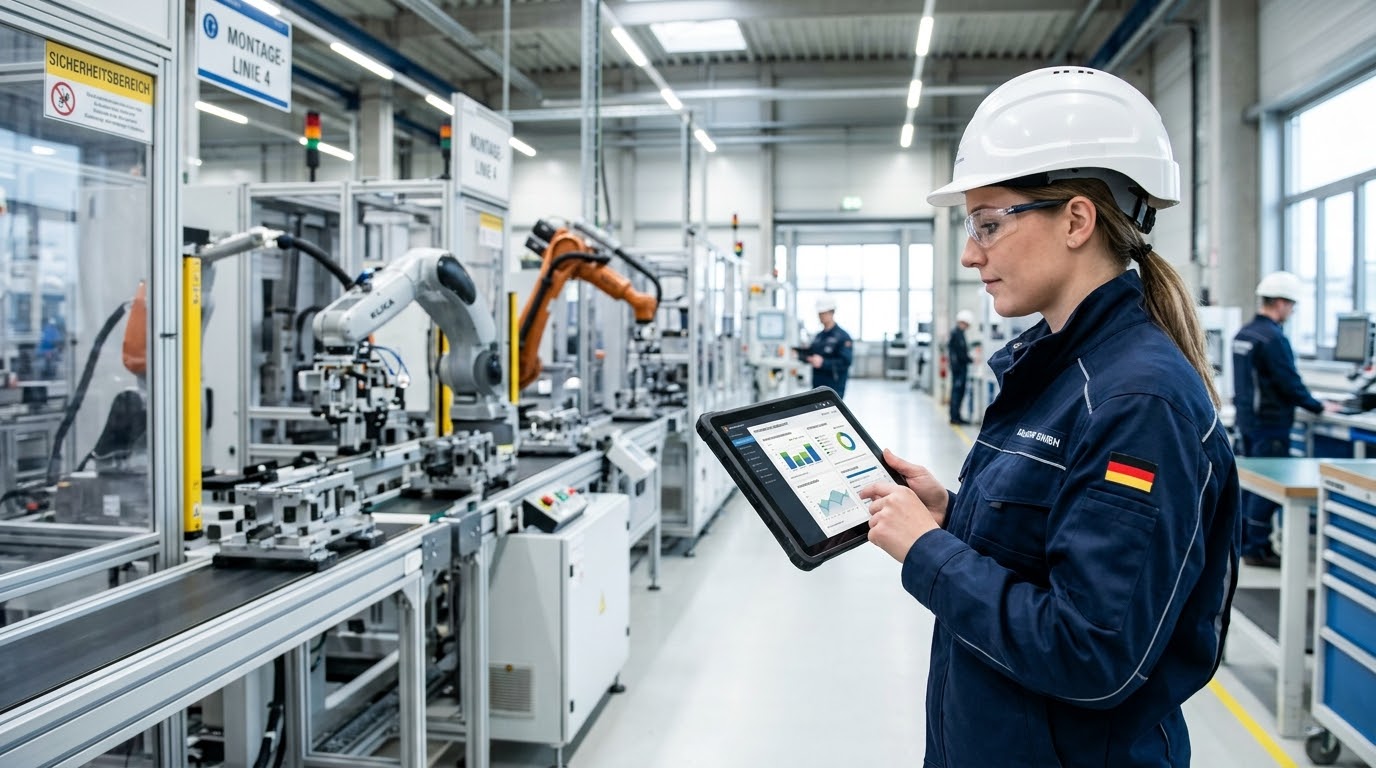
Germany’s manufacturing industry creates opportunities for industrial engineers who can improve production processes, reduce operating costs, maintain quality standards, and help factories work more efficiently. Employers in sectors such as automotive manufacturing, machinery, electronics, chemicals, and industrial technology hire professionals to solve production problems and improve performance.
For job seekers outside Germany, the most important things to understand are the qualifications employers expect, the salary available, the technical skills required, and how to find employers willing to consider international applicants.
What Does an Industrial Engineer Do in Germany?
Industrial engineers help companies make production and business operations more efficient. Their work combines engineering knowledge, data analysis, process improvement, and project coordination.
Depending on the employer, the job may involve:
- Production planning: Organizing manufacturing processes, production schedules, and the use of equipment and materials.
- Process improvement: Identifying delays, waste, and unnecessary costs, then recommending practical solutions.
- Quality management: Monitoring production standards and helping prevent defects.
- Lean manufacturing: Applying methods such as continuous improvement and waste reduction to improve productivity.
- Data analysis: Reviewing production figures, identifying performance problems, and preparing reports.
- Project coordination: Working with production, maintenance, purchasing, and management teams to introduce improvements.
Industrial engineering jobs are not limited to factory floors. Some positions focus on supply chains, logistics, production systems, operational planning, or manufacturing projects.
Industrial Engineer Salary in Germany
Industrial engineer salaries depend on experience, qualifications, the employer, the industry, and the location. Senior professionals and engineers with specialized production or process-improvement skills may earn more than entry-level candidates.
According to StepStone’s Industrial Engineer salary information, the estimated salary range in Germany is approximately €50,700 to €69,900 gross per year, with an average of about €59,800.
| Salary level Estimated | d gross pay |
|---|---|
| Lower end of the reported range | €50,700 per year |
| Average reported salary | €59,800 per year |
| Upper end of the reported range | €69,900 per year |
| Average monthly salary | About €4,983 |
These are salary estimates, not guaranteed offers or official minimum salaries. Actual pay can differ substantially between employers and roles. Gross salary is also the amount before income tax and social insurance deductions.
When comparing vacancies, check whether the employer offers additional benefits such as a company pension, performance bonuses, relocation assistance, or support with professional development.
Qualifications Required for Industrial Engineer Jobs
Most industrial engineering positions require a relevant university degree or a closely related technical qualification. The exact requirement depends on the responsibilities of the job.
Common qualifications include:
- Industrial engineering: A degree in industrial engineering, often combining engineering and business or operations management.
- Mechanical engineering: Relevant for roles involving manufacturing systems, machinery, production processes, and factory optimization.
- Manufacturing or production engineering: Suitable for positions focused on production planning, process design, and manufacturing performance.
- Electrical engineering or mechatronics: May be accepted for industrial engineering roles involving automated production equipment or technical systems.
- Related engineering or operations degrees: Some employers accept other relevant qualifications if the applicant has the required technical knowledge and experience.
A degree alone may not be enough for a competitive position. Employers may also look for practical experience in manufacturing, quality assurance, production planning, process optimization, or project management.
Does Germany Require Recognition of a Foreign Engineering Degree?
The answer depends on the specific position and the immigration route you intend to use.
Some engineering roles are connected to the regulated professional title Ingenieur in Germany. Requirements can therefore differ depending on the job and the state where you plan to work. For immigration purposes, non-EU applicants may also need to prove that their university qualification is recognized or comparable to a German degree.
Before applying, check your circumstances through the official Make it in Germany guidance on recognition and the Anabin database, which provides information about foreign universities and qualifications.
Do not assume that every industrial engineering vacancy has identical recognition requirements. Check the employer’s requirements and the conditions of the visa route that applies to you.
Skills Employers Look for in Industrial Engineers
Employers generally want candidates who can turn technical knowledge into measurable improvements. Useful skills include:
- Production and process optimization: Understanding how to improve output, reduce downtime, and make better use of resources.
- Data analysis: Using production data, spreadsheets and reporting tools to identify problems and track results.
- Lean manufacturing and continuous improvement: Familiarity with methods such as 5S, Kaizen and root-cause analysis can be valuable.
- Quality management: Knowledge of quality-control methods and, where relevant, standards such as ISO 9001.
- CAD, ERP or manufacturing software: Experience with tools used for technical design, resource planning or production management, depending on the vacancy.
- Project management: Coordinating tasks, deadlines, budgets and communication between departments.
- Communication: Explaining technical issues clearly to colleagues, managers and production teams.
You do not need every skill on this list for every position. Focus on the software, methods and experience specifically requested in the vacancy and provide examples of how you have used them.
Do You Need German to Work as an Industrial Engineer?
German-language requirements vary by employer and role. Some international companies use English for certain engineering tasks, particularly in multinational teams. However, German is often useful when communicating with production workers, suppliers, local management, and customers.
Check the language requirement in each job advertisement. If the employer requests a particular German proficiency level, do not assume that English alone will be sufficient. Improving your German can widen the range of jobs you can apply for and make workplace communication easier.
Where to Find Industrial Engineer Jobs in Germany
If you want to work as an industrial engineer in Germany, start with official job portals and employers’ own career websites. Search for vacancies that match your engineering background, experience, and language skills. If you are applying from abroad, pay particular attention to whether the employer considers international applicants.
1. Make it in Germany — Official Job Listings
The German government’s Make it in Germany portal provides job listings from the Federal Employment Agency, including opportunities from employers who welcome applications from abroad.
Apply here: Search jobs on Make it in Germany.
Try search terms such as Industrial Engineer, Process Engineer, Production Engineer, Manufacturing Engineer, and Produktionsingenieur.
2. Federal Employment Agency
The Federal Employment Agency operates Germany’s public employment service and provides a large job-search database.
Apply here: Search vacancies on the Federal Employment Agency website
Use both English and German job titles. Some employers advertise engineering positions in German even when they may consider candidates from other countries.
3. EURES — European Job Mobility Portal
EURES is the European employment network, providing job vacancies and information about working in participating European countries.
Search here: EURES job portal
Check the eligibility and location requirements of individual vacancies. EURES is useful for job discovery, but it does not guarantee that every vacancy is open to applicants outside the EU.
4. Apply Directly Through Engineering Employers
Many industrial engineering opportunities are advertised on company career pages. Look at manufacturers in automotive production, industrial machinery, electronics, chemicals, medical technology, and logistics.
Examples of employers worth checking include:
These are employer career pages, not guarantees of current industrial engineer vacancies. Search each website for relevant roles and read the requirements before applying.
How to Apply for Industrial Engineer Jobs in Germany
Applying from abroad requires more preparation than sending a CV alone. Employers need to see that your experience matches the job and that you understand the requirements of working in Germany.
Step 1: Find a Suitable Vacancy
Read the full job description before applying. Check the required degree, years of experience, technical skills, language level, and work location.
Useful search terms include:
- Industrial Engineer
- Manufacturing Engineer
- Production Engineer
- Process Improvement Engineer
- Industrial Engineering Specialist
- Produktionsingenieur
- Prozessingenieur
- Fertigungsingenieur
These titles overlap, but they are not always interchangeable. Compare the actual responsibilities with your experience.
Step 2: Prepare a German-Style CV
Create a clear, professional CV tailored to the vacancy. Include:
- Your engineering degree and institution.
- Relevant work experience and responsibilities.
- Manufacturing, production-planning, or process-improvement projects.
- Technical software and analytical tools you can use.
- Languages and your proficiency level.
- Your contact details and location.
Where possible, show measurable results. For example, explain how a project reduced production waste, improved output, shortened processing time, or improved product quality. Only include figures you can substantiate.
A cover letter should briefly explain why your experience fits the position and what you can contribute to the employer.
Step 3: Prepare Your Supporting Documents
Employers may request some or all of the following:
- Updated CV.
- Cover letter.
- University degree certificate.
- Academic transcripts.
- Employment references or experience letters.
- Certificates for relevant technical training.
- Evidence of German or English proficiency, if required.
- Qualification-comparability documents, where applicable.
Prepare clear digital copies and translations if requested. Do not pay for unnecessary certification or translation before confirming what the employer or relevant authority requires.
Step 4: Submit Your Application
Apply through the employer’s official career portal or the application method stated in the vacancy. Follow the instructions carefully and submit all requested documents.
Keep a record of the employer, job title, application date, and any response. If you receive an interview invitation, prepare examples of your technical achievements and be ready to explain how you solve production or process problems.
Step 5: Check Your Work-Visa Requirements
If you are a non-EU applicant, you will generally need an appropriate residence title to take up employment in Germany.
The qualified-professional work visa may be an option if you meet its requirements, including having a suitable job offer and the required proof of your qualification. Other routes may apply depending on your background and circumstances.
Read the official guidance before making plans:
- Germany’s work visa for qualified professionals
- Official information on recognition of foreign qualifications
- Anabin database for foreign academic qualifications
Do not assume that an employer will arrange your visa or pay relocation costs. Ask about these matters directly and check the actual immigration requirements that apply to you.
READ ALSO
Electrician Jobs in Germany 2026–2027: Salary, Requirements and How to Apply
Germany Opportunity Card 2027: Requirements, Points, Cost and How to Apply
How to Improve Your Chances of Getting Hired
Industrial engineering vacancies can attract applicants with different technical backgrounds. To stand out, show employers how your experience relates to their production or operational needs.
- Demonstrate measurable results: Explain how you improved production efficiency, reduced waste, lowered costs or helped resolve a manufacturing problem.
- Highlight relevant software: Include tools you have actually used, such as SAP, Excel, CAD software or production-planning systems, where relevant to the vacancy.
- Show practical experience: Internships, industrial placements, university projects and previous engineering employment can strengthen an application.
- Learn relevant improvement methods: Knowledge of Lean Manufacturing, Six Sigma, root-cause analysis or continuous improvement can be useful for process-focused roles.
- Improve your German: Even when a role accepts English, German can help you qualify for more opportunities and communicate effectively with colleagues.
- Tailor each application: Match your CV to the employer’s actual requirements instead of sending the same generic application to every company.
Common Mistakes to Avoid
Applying without checking the qualifications. Some positions require specific engineering degrees, production experience or specialized technical knowledge. Apply where your background genuinely matches the role.
Using only English search terms. German job titles such as Produktionsingenieur, Prozessingenieur and Fertigungsingenieur can help you find additional vacancies.
Assuming every employer sponsors international applicants. A company may recruit engineers but still expect candidates to have existing work authorization. Ask about international recruitment and visa support where necessary.
Ignoring salary and contract details. Confirm the gross annual salary, working hours, probation period, location, and any relocation support before accepting an offer.
Paying someone for a guaranteed job. Be cautious of recruiters who promise guaranteed employment or visas in exchange for large upfront payments.
How to Avoid Industrial Engineering Job Scams
When applying from outside Germany, verify the vacancy and employer before sharing sensitive documents or making payments.
- Apply through the employer’s official careers website whenever possible.
- Check that the company exists and that the vacancy appears on a legitimate recruitment channel.
- Be suspicious of offers made without a credible interview or assessment.
- Do not pay an individual who promises a guaranteed job, work permit or visa approval.
- Verify any recruitment agency and ask for written details of its services and fees.
- Confirm visa procedures through official German government or embassy information.
A genuine job offer does not automatically guarantee a visa. German authorities make immigration decisions under the applicable rules.
Frequently Asked Questions
What is the salary of an industrial engineer in Germany?
The salary depends on experience, industry, location, and responsibilities. The StepStone salary estimate discussed in Part 1 places the average at approximately €59,800 gross per year, with actual offers varying by employer and role. Check current vacancies and salary information before making financial plans.
Can foreigners apply for industrial engineer jobs in Germany?
Yes. International applicants can apply when they meet the employer’s requirements and the applicable immigration conditions. Whether a company considers candidates from abroad depends on the specific vacancy and recruitment policy.
Do I need a degree to work as an industrial engineer in Germany?
Many professional industrial engineering roles require a relevant university degree. Some employers may consider related qualifications and practical experience for particular positions. Check the job advertisement and any qualification-recognition requirements that apply to your intended role.
Can I get an industrial engineering job in Germany without experience?
Entry-level opportunities, graduate positions and engineering internships may be available, but their requirements differ. Search for terms such as Junior Industrial Engineer, Graduate Engineer, Trainee Ingenieur and Berufseinsteiger Ingenieur. Candidates without experience should highlight relevant academic projects, internships and technical skills.
Is German compulsory for industrial engineering jobs?
Not for every vacancy. Some positions accept English, particularly in international teams, while others require German for daily workplace communication. Always check the language requirements listed by the employer.
Where can I apply for industrial engineer jobs in Germany?
Start with the Federal Employment Agency job portal, Make it in Germany job listings, and the official career websites of manufacturing and engineering companies.
Can an industrial engineer get a German work visa?
A qualified applicant may be eligible for a suitable German work-residence route if the relevant conditions are met. These may include a qualifying job offer and evidence of the required academic or professional qualification. Review the official German qualified-professional work visa guidance before relying on any particular route.
Conclusion
Industrial engineering offers opportunities in Germany’s manufacturing and industrial sectors, but a successful application depends on matching your qualifications and skills to a real vacancy. Start with official job portals, prepare a targeted CV, verify qualification requirements, and investigate visa eligibility before accepting an offer.
Focus on employers whose requirements fit your experience rather than applying indiscriminately. This gives you a clearer and more practical route towards working as an industrial engineer in Germany.
Disclaimer
Salary figures, job vacancies, and employment requirements may change. Always verify details with the official employer and German authorities before applying. CareerOpportune does not guarantee employment, visa approval, or job offers.